How to Choose the Best Plastic Film Rolls for Your Needs?
Choosing the right plastic film rolls is crucial for various industries. According to a recent report by the Flexible Packaging Association, the U.S. plastic film market is projected to exceed $30 billion by 2024. This significant growth highlights the importance of selecting high-quality films that meet specific needs.
Industry expert John Smith states, “Innovation in plastic film rolls can enhance productivity and sustainability.” His insights reflect the ongoing evolution in materials and technologies. When selecting plastic film rolls, factors such as thickness, material type, and intended use play a vital role.
The challenge is to balance quality and cost. It’s often tempting to opt for lower prices, but this could lead to performance issues. Understanding your requirements is essential to avoid potential waste. As industries grow, so does the need for reliable suppliers who can provide tailored solutions. This complexity requires reflection on one’s choices and their long-term implications in the supply chain.

Understanding the Different Types of Plastic Film Rolls Available
When selecting plastic film rolls, understanding the types available is crucial. Different applications require different properties. For instance, polyethylene film is popular for its durability. It resists moisture and is often used in packaging.
Polypropylene film offers clarity and a glossy finish. It’s more rigid and ideal for applications where presentation matters. If you need UV protection, consider the films that have added UV stabilizers. These are essential for outdoor uses.
Tips: Always test a small sample first. This helps you gauge how well the film performs. Ensure the thickness is appropriate for your needs. A thicker film offers more protection but can be harder to handle. Evaluate the specific requirements of your project. Consider physical properties: tensile strength and tear resistance are key factors. Not all films suit every task. Reflect on your goals before making a choice.
Understanding the Selection of Plastic Film Rolls
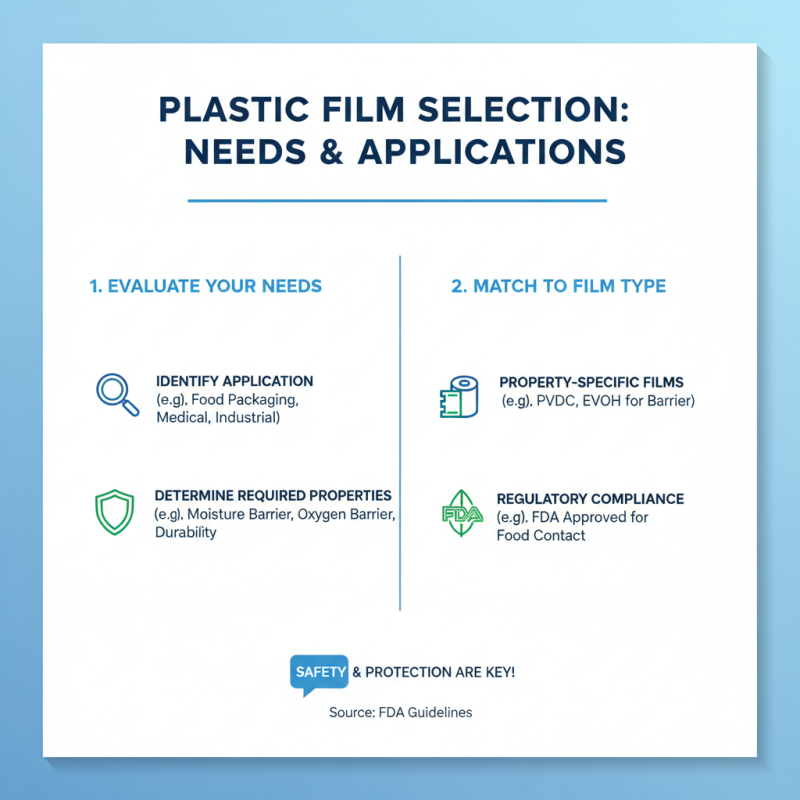
Evaluating Your Specific Needs and Applications for Plastic Film
Choosing the right plastic film rolls starts with understanding your specific needs. Different applications require different properties. For instance, food packaging often demands films that provide barrier protection against moisture and oxygen. The Food and Drug Administration (FDA) emphasizes the importance of safety in food contact materials. This ensures the film does not contaminate the food it protects.
Durability is another key factor. Some industries, like agriculture, rely on plastic film for greenhouse applications. According to a report by MarketsandMarkets, the global agriculture film market is expected to grow significantly. Films used in agriculture need to be resistant to UV exposure and stretching. Evaluating the climatic conditions your films will face is crucial. Will they be exposed to harsh sunlight or chemicals?
Cost-effectiveness is equally important. While high-quality films may seem expensive initially, they can lead to savings over time due to reduced waste and better product protection. Not every situation calls for premium-grade films. It’s essential to assess both short-term and long-term costs. Reflect on your specific application requirements. Are you choosing durability over cost? Or vice versa? Understanding these trade-offs will help streamline your decision-making process.
Key Factors to Consider When Selecting Plastic Film Materials
When selecting plastic film materials, a few key factors are essential. The application is crucial. Consider what the film will be used for. Different applications require different properties. For example, food packaging films need to be food-safe and moisture-resistant. Conversely, agricultural films should offer UV protection and durability against harsh weather.
Thickness is another vital consideration. Thicker films typically offer better strength and durability. However, they may be less flexible. You’ll need to find a balance based on your specific use case. Transparency is also important in some applications, like display packaging. Clear films enhance the visibility of products. However, opaque films are better for privacy and light-blocking needs.
Don’t forget about the environmental impact. Many consumers prefer recyclable or biodegradable options. Look for films that can minimize waste. This awareness reflects a growing trend towards sustainability in packaging. Ultimately, the perfect choice will depend on evaluating these factors according to your project's unique requirements. It can be a challenging process, but making informed choices leads to better results.
Comparing Quality and Cost of Different Plastic Film Options
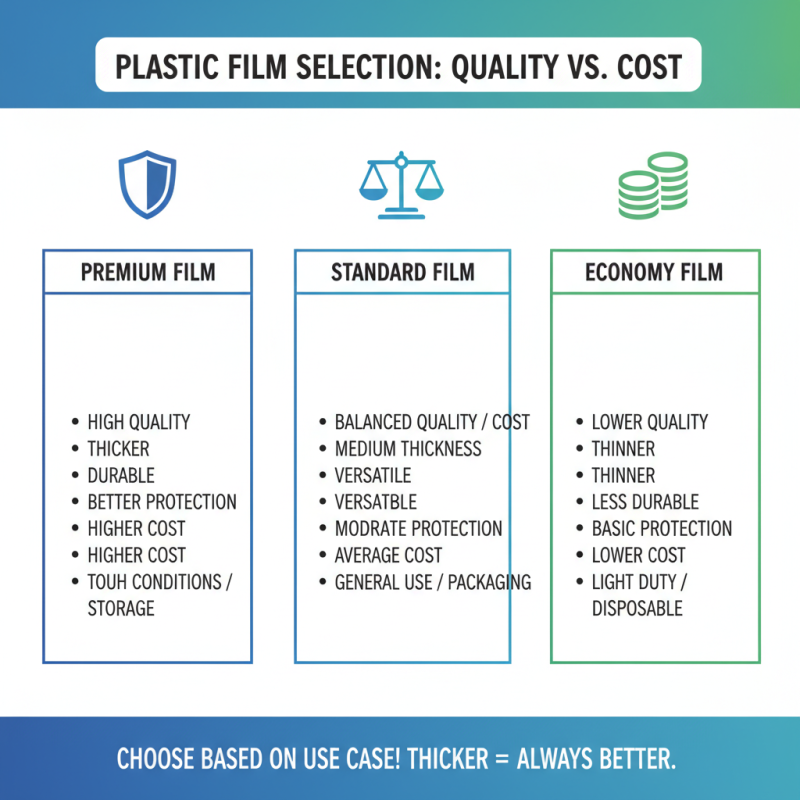
When selecting plastic film rolls, it's crucial to evaluate both quality and cost. High-quality films often provide better durability. For instance, thicker films can withstand tougher conditions, making them ideal for protection and storage. However, thicker does not always mean better; consider the specific use case. Some applications might not require extra thickness, allowing for cost savings.
Price differences can often indicate varying quality. Inexpensive options may not perform well over time. This can lead to waste and additional expenses if materials fail prematurely. Always ask for specifications and weight options. Understanding these details is key to making an informed decision.
It's essential to weigh your budget against expected performance. Sometimes, investing more upfront can result in lower long-term costs. A cheap film that tears easily may lead to higher replacement rates. Reflect on the specific needs of your project. What is the film’s primary function? Depending on the answer, your choice may lean more toward quality or cost-effectiveness.
Sourcing and Purchasing: Where to Find the Best Plastic Film Rolls
When sourcing and purchasing plastic film rolls, it is essential to evaluate your needs first. Consider the specific application, whether for packaging, insulation, or other uses. Different thicknesses, textures, and types exist. Knowing your requirements helps narrow down options.
Explore reputable suppliers that align with your needs. Local distributors may offer lower costs and quicker delivery. Online marketplaces provide a wide range of options but may compromise on shipping time. Ask for samples to assess quality. Many suppliers have minimum order quantities, which might affect your choice.
Research the suppliers' reputation through customer reviews. Reliable feedback can indicate product quality and service. However, every company can have varying experiences. Keep an open mind when negotiating terms. Sometimes, a supplier may not meet expectations, prompting a reevaluation of your options. Exploring feedback, quality, and reliability may take time but is worth the effort.
How to Choose the Best Plastic Film Rolls for Your Needs?
| Dimension |
Material Type |
Thickness (Microns) |
Film Width (mm) |
Length (m) |
Application |
| 1000 mm x 500 m |
LDPE |
20 |
1000 |
500 |
Packaging |
| 1500 mm x 300 m |
HDPE |
40 |
1500 |
300 |
Agricultural |
| 1200 mm x 400 m |
BOPP |
30 |
1200 |
400 |
Printing |
| 800 mm x 600 m |
PVC |
50 |
800 |
600 |
Construction |
| 600 mm x 1000 m |
OPP |
25 |
600 |
1000 |
Food Packaging |