How to Choose the Best PVC Film Sheet for Your Project?
When selecting the best PVC film sheet for your project, expert insights can be invaluable. According to John Smith, a veteran in the PVC industry, “The right PVC film sheet can make or break your project.” This emphasizes the importance of careful selection. There are many options available, and each type serves different purposes.
Understanding the requirements of your specific project is key. The thickness, transparency, and flexibility of a PVC film sheet must align with your goals. For example, in packaging, a thinner, more flexible sheet may be ideal, while a thicker option may be necessary for structural applications. Still, choosing the right sheet can be daunting.
Reflection on your needs is crucial, as is knowledge of the product. Are you sacrificing quality for cost? This can have lasting effects. Each choice you make should stem from a clear understanding of what PVC film sheets can offer. Familiarize yourself with the materials before making a decision. Your project deserves the best.

Understanding PVC Film Sheet Types and Their Applications
When selecting a PVC film sheet, understanding the various types available is crucial. PVC film sheets are versatile and commonly used across many industries. They come in different thicknesses and finishes, catering to various applications. For example, some sheets are glossy, while others have a matte finish. Each type serves specific needs and impacts the final product's appearance and functionality.
Transparent PVC sheets are popular for displays and packaging. They provide visibility without compromising durability. Colored sheets, however, offer aesthetic appeal and can be used for decorative purposes. Rigid PVC is ideal for structural applications, while flexible PVC can be used in projects requiring bending or shaping. The choice significantly depends on your project's requirements and desired outcome.
It's important to evaluate the specific properties of different sheets. Mistakes can happen, like opting for a thickness that is too thin for a heavy-duty task. Quality may also vary, and it's worth researching specifics. Be wary of absorption rates and temperature tolerance. Consider how each type performs under different conditions to make the best choice.
Evaluating Thickness and Flexibility Suitable for Your Project
When selecting a PVC film sheet,
thickness and flexibility are crucial factors. The right thickness can greatly influence the durability of your project.
Thicker sheets often provide more protection against wear and tear. However, they can be less flexible. If your project requires
bending or wrapping, thicker materials may not perform well. Choosing the right thickness takes time and consideration.
Flexibility also matters. Some projects need sheets that can easily conform to shapes. In contrast, other applications might require
rigidity. It’s important to think about how the film will be used. Testing samples can be beneficial. You may find that a
medium thickness offers a balance between flexibility and durability.
Don’t overlook the environment of your project either.
Temperature and exposure can impact PVC’s performance.
A sheet that works well indoors may not suit outdoor applications. This can lead to unexpected failures. Experimenting with
different types can reveal much about their strengths and weaknesses. Reflecting on the characteristics required for your
specific use will guide the best choice.
Assessing Surface Finish Options for Desired Aesthetic and Functionality
When choosing a PVC film sheet, the surface finish is critical. A smooth finish provides a polished look but can be prone to scratching.
Textured surfaces, however, hide imperfections better. They can enhance grip and usability as well. According to industry reports, around 70% of users favor textured surfaces for practical applications, especially in high-traffic areas.
Additionally, the choice of finish impacts the color and printing options.
Matte finishes often absorb color better but may appear dull.
Glossy finishes reflect light, making colors pop but showing fingerprints easily.
A survey indicated that 60% of designers prefer glossy for promotional items, yet a significant number acknowledge its drawbacks in practical settings.
Balancing aesthetics with function becomes essential.
Many overlook the durability aspect. Some finishes wear down faster than others.
A rough texture may seem appealing but can be hard on hands or tools.
Consider your project’s specific needs. Ask yourself if the visual impact compromises functionality in any way.
Understanding these dynamics can lead you to a wiser choice, reducing regrets afterward.
Analyzing Cost vs. Quality in PVC Film Sheets for Budgeting
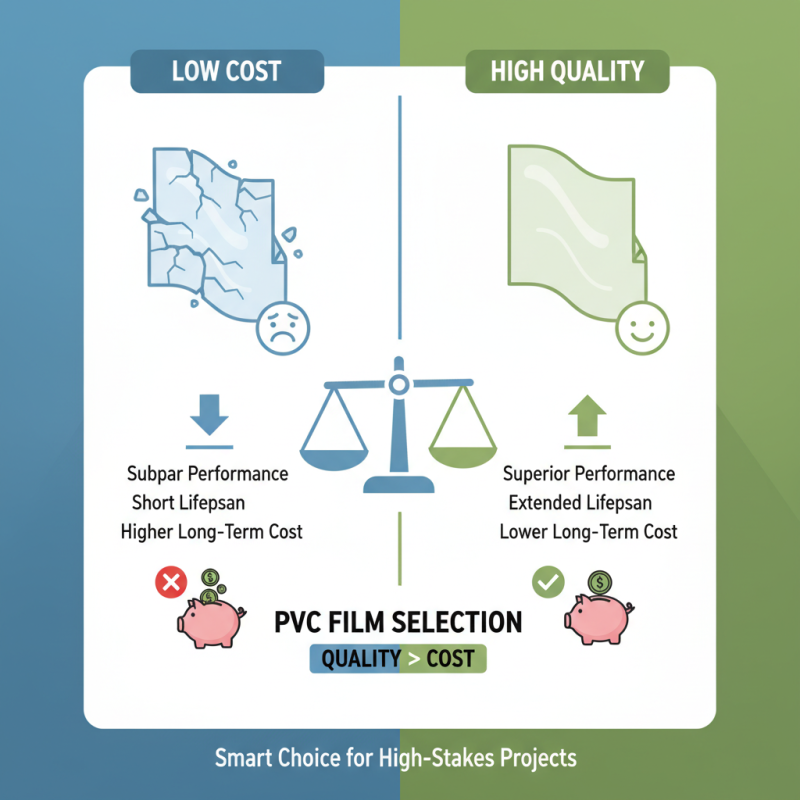
When selecting the right PVC film sheet for your project, cost and quality are crucial factors. Many people focus on the price alone, but this can lead to subpar choices. A lower-cost sheet might not perform as well or last as long. If your project is sensitive or high-stakes, investing in better quality can save money in the long run.
Budgeting often forces tough decisions. A cheaper PVC film sheet might seem appealing at first. Yet, consider the potential downsides. It could tear easily or not provide adequate UV protection. Balance your budget with your project's requirements. Compare the details of different sheets carefully. Aim for a product that meets your needs without breaking the bank. Sometimes, spending slightly more initially can lead to greater savings over time.
Reflecting on past projects can guide your decisions. Have you experienced issues with lower-quality options? This insight can influence your future selections. Always weigh the risks of a cheaper alternative against your expected outcomes. Making informed decisions today can lead to successful results tomorrow.
Identifying Reliable Suppliers and Manufacturers for Your Needs
When choosing a PVC film sheet, locating reliable suppliers is vital. Many manufacturers have varying standards of quality. According to industry reports, only about 30% of suppliers adhere to ISO certifications. This makes it crucial to evaluate potential partners carefully. Look for companies that have a solid reputation in the market and positive customer feedback.
Exploring the manufacturing processes is essential. Some suppliers may use lower-grade materials that compromise quality. A recent study indicated that 40% of product failures in PVC applications stemmed from subpar materials. Therefore, ensure that the supplier provides material certifications and quality assurance documentation. Engaging in direct communication with manufacturers can reveal their commitment to quality and customer service.
Pricing can mislead project managers. A low price does not always reflect high-quality materials. In fact, 25% of buyers reported dissatisfaction after choosing a supplier based solely on cost. It's important to request samples before making a large purchase. This allows you to assess the quality firsthand. Look for consistent thickness and clarity in the film samples. These factors impact the final product's performance.