Leave Your Message

How to Choose the Right PVC Mask Supplier?

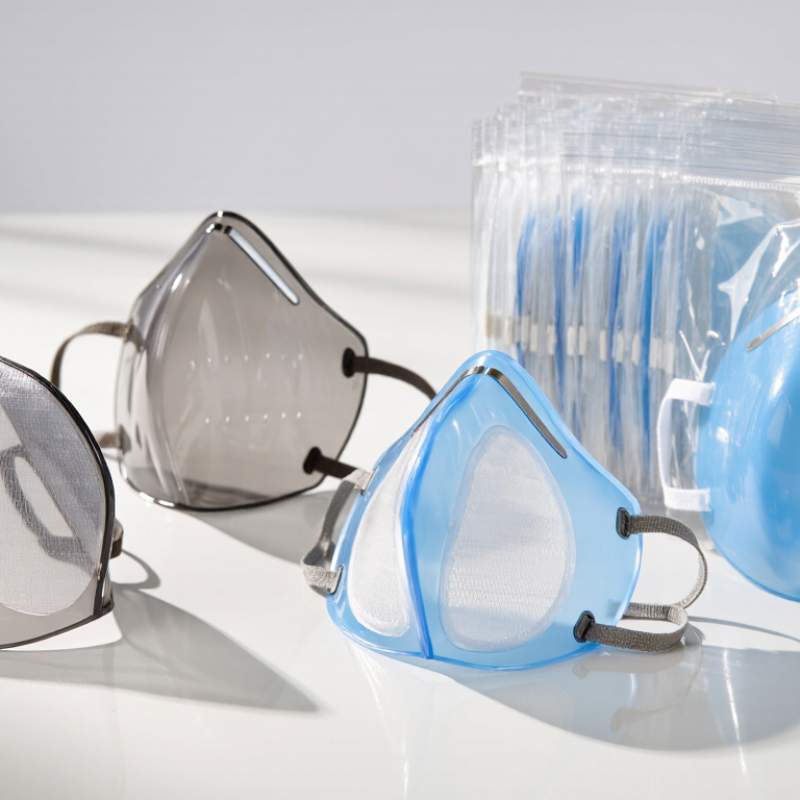
Choosing the right Pvc Mask supplier is not simply a search for the lowest quotation. It is a quality decision involving material safety, product consistency, user comfort, and dependable delivery. A responsible supplier should explain the PVC grade, mask structure, intended application, and available test records. Clear evidence matters more than polished promises. As PPE quality specialist Dr. Raina MacIntyre puts it, “A mask is only as reliable as its fit, filtration, and consistent manufacture.” That principle deserves attention.

Look closely at production details. Can the supplier provide samples from the same production line? Are dimensions stable between batches? Do the straps stretch evenly, or do they feel weak after repeated handling? Ask for traceability documents, inspection procedures, and relevant conformity information for your target market. A professional factory should answer without avoiding practical questions. It should also discuss packaging hygiene, storage conditions, lead times, and replacement procedures.

Price still matters. It should not lead the decision.

A supplier may offer an attractive unit cost, yet add delays through unclear customization terms. Another may provide impressive certificates but weak communication during sampling. These are uncomfortable differences, but they reveal real purchasing risk. I would compare at least three suppliers and record their responses in one table. Then test the Pvc Mask in realistic conditions, including movement, humidity, and extended wear. One overlooked detail can become a repeated complaint. The best supplier is not always the largest one. It is the partner that can prove consistency, admit limitations, and improve when the first sample is not perfect.
How to Choose the Right PVC Mask Supplier?

Define PVC Mask Requirements: Medical, Industrial, or Consumer Use

How to Choose the Right PVC Mask Supplier?

Before contacting a PVC mask supplier, define the mask’s intended environment. Medical use requires careful attention to skin contact, cleanliness, odor, and material documentation. Ask for test reports, batch traceability, and clear production records. A supplier should explain whether the mask supports your cleaning or sterilization process. Do not assume “medical grade” means suitable for every application. Requirements can differ between examination, protection, and training environments.

Industrial users may need resistance to dust, splashes, abrasion, or repeated handling. Describe the workplace clearly, including temperature, exposure time, and movement demands. A mask that feels strong in a showroom may become uncomfortable after several hours. Consumer masks need a different balance. Comfort, appearance, easy cleaning, and stable sizing often influence purchase decisions. Ask for samples in realistic conditions. Small issues, such as tight straps or a strong plastic smell, become important quickly.

Tips: Write a requirement sheet before comparing suppliers. Include dimensions, PVC hardness, transparency, edge finish, packaging, and expected service life. Request samples from the same production process, not only polished prototypes. Check fit with different face sizes. Review certificates carefully, and confirm the testing scope matches your use. It is also wise to ask how rejected products are controlled. A supplier may offer a low price, yet weak traceability can create costly uncertainty later. Reconsider requirements after sample testing; the first specification is rarely perfect.


Verify PVC Safety Against REACH SVHC 0.1% and RoHS 0.1% Limits

Choosing a PVC mask supplier requires more than checking a glossy compliance statement. Under REACH Article 33, suppliers must disclose Candidate List SVHCs above 0.1% by weight in each article. ECHA’s Candidate List continues to expand, so an old declaration may already be incomplete. Ask for the issue date.

RoHS uses a different testing logic. The 0.1% limit applies to most restricted substances in homogeneous materials, while cadmium has a stricter 0.01% limit. The European Commission’s RoHS technical framework also stresses material-level verification, not only finished-product claims. A PVC mask may not fall within RoHS scope unless it is part of electrical or electronic equipment. Do not assume.

Request an independent laboratory report covering PVC, pigments, plasticizers, metal parts, and packaging. The report should identify test methods, detection limits, sample photographs, batch numbers, and the laboratory’s accreditation. ECHA enforcement projects have reported non-compliance in inspected consumer products, showing why paperwork alone is weak evidence. Check the actual material.

A capable supplier should provide a recent REACH SVHC declaration, a RoHS declaration where applicable, and traceability from resin to shipment. Suppliers should also explain formulation changes before production. This sounds basic. It is often missed. One practical concern remains: a passing sample cannot guarantee every future batch, especially when recycled PVC or substitute plasticizers enter the supply chain. Re-test after major formulation changes.

How to Choose the Right PVC Mask Supplier? - Verify PVC Safety Against REACH SVHC 0.1% and RoHS 0.1% Limits

Verification Dimension Applicable Requirement or Benchmark Evidence to Request from the Supplier Acceptance Guidance Priority
REACH SVHC concentration If an article contains a Substance of Very High Concern above 0.1% by weight, communication duties may apply under REACH Article 33. The 0.1% level is not automatically a general prohibition. A product-specific SVHC declaration, material composition statement, and test report or analytical screening covering the current Candidate List. Require the supplier to identify the exact homogeneous material and any SVHC above 0.1%, rather than accepting an unsupported “REACH compliant” statement. Critical
RoHS restricted substances For restricted substances in homogeneous materials, the maximum concentration is generally 0.1% by weight; cadmium has a lower limit of 0.01% by weight. The RoHS substance list includes lead, mercury, hexavalent chromium, PBB, PBDE and four phthalates, in addition to cadmium. A RoHS test report using recognized analytical methods, with results reported separately for each homogeneous material used in the mask. Do not assess only the finished product average. PVC, pigment, printed ink, coating, elastic component and metal parts should be evaluated separately where applicable. Critical
PVC formulation and plasticizers PVC may contain plasticizers, stabilizers, pigments and processing aids. Certain phthalates are restricted under RoHS, while other substances may be relevant under REACH depending on their identity and concentration. A controlled bill of materials, plasticizer identity, additive declaration, and batch-specific formulation control statement. Prefer suppliers that disclose material families and control formulation changes through documented change management. High
Homogeneous-material traceability Compliance results should be traceable to separable materials and components, not only to a generic product description. Sample photographs, component list, material coding, production batch number, test-sample identification and chain-of-custody records. Reject reports that do not clearly identify the tested mask design, material, production date or sample source. High
Laboratory competence Chemical test reliability depends on validated methods, calibration, quality controls and competent laboratory personnel. A complete report showing the laboratory name, accreditation scope, test methods, detection limits, sample description, test date and result units. Give preference to laboratories accredited to ISO/IEC 17025 for the relevant chemical testing scope. Verify the accreditation directly where possible. High
Test-report currency REACH SVHC obligations depend on the Candidate List in force at the relevant time, while RoHS requirements may also change through legal amendments. Report issue date, Candidate List version used, legal reference, product revision and confirmation that the tested formulation matches current production. Request an updated review after any regulatory amendment, formulation change, new pigment, new plasticizer or change of raw-material source. High
Skin-contact and odor controls Regulatory compliance alone does not prove that a mask is suitable for prolonged skin contact or free from objectionable odor and irritation potential. Material safety information, skin-contact assessment where relevant, odor evaluation records, and information on residual processing chemicals. Confirm that the intended use, contact duration, user population and packaging conditions are covered by the supplier’s safety assessment. Medium
Supplier change control A valid test report may no longer represent the product after changes to PVC resin, plasticizer, pigment, coating, adhesive, packaging or manufacturing location. Written change-notification procedure, approved-material list, re-testing triggers and retained production samples. Select suppliers that require customer approval or documented requalification before compliance-sensitive materials are changed. Medium
Documentation completeness Compliance documentation should be specific, consistent and connected to the purchased product rather than copied from an unrelated item. Signed declaration, test report, bill of materials, product specification, batch records and supplier contact responsible for compliance. Treat missing product identifiers, unexplained blank results, inconsistent material descriptions or undated declarations as verification gaps. Medium

Note: The 0.1% REACH SVHC threshold and RoHS concentration limits are assessed by weight and should not be confused with a finished-product average. Confirm the current legal requirements for the target market and intended use before placing the PVC mask on the market.

Compare Filtration Targets: BFE ≥95% or ≥98% Under EN 14683

When choosing a PVC mask supplier, compare the filtration target before comparing prices. EN 14683:2019+AC:2019 classifies medical masks by bacterial filtration efficiency. Type I requires BFE of at least 95%, while Type II and Type IIR require at least 98%. That three-percentage-point gap looks modest. It still reflects a stricter production target and tighter quality control.

Ask suppliers for complete laboratory reports, not isolated marketing figures. Reports should identify the test method, sample size, test date, and laboratory competence. EN 14683 also evaluates differential pressure, splash resistance, and microbial cleanliness. A mask reaching 98% BFE may still perform poorly if breathing resistance is uncomfortable or ear loops fail during use. Check whether results apply to the finished mask, not only the filter material. Small details matter.

Supplier audits should include batch records, meltblown material controls, seal inspections, and retention samples. Industry testing guidance commonly treats repeated sampling as more reliable than one impressive result. Request recent reports from independent laboratories. Do not accept a scanned certificate without verification. I would also compare failure limits, because “≥98%” does not explain how often production falls below target. The assessment is not perfect. Human fit, storage humidity, and handling can change real-world performance. A transparent supplier should acknowledge those uncertainties and provide corrective-action records when results drift.

Under EN 14683, Type I medical face masks require a bacterial filtration efficiency (BFE) of at least 95%, while Type II and Type IIR require at least 98%. When evaluating a PVC mask supplier, confirm that test reports identify the applicable EN 14683 classification and demonstrate the required BFE level.

Audit Supplier Quality Systems: ISO 9001 and ISO 13485 Certification

When choosing a PVC mask supplier, audit its quality system before comparing prices. ISO 9001 shows that the supplier manages consistent processes, documented procedures, and customer feedback. ISO 13485 is more specific to medical device quality management. It focuses on risk control, traceability, validation, and product safety. Ask for current certificates, not scanned documents from an old audit.

Check the certificate scope carefully. It should cover the correct facility, product category, and manufacturing activities. A certificate alone is not enough. Ask how the factory controls PVC materials, molds, colorants, and packaging. Review incoming inspection records and batch labels. Can the supplier trace one carton back to a production date and material lot? Ask for evidence. Vague answers deserve attention.

Experienced auditors also examine corrective action reports. These records reveal whether the supplier fixes root causes or only repairs visible defects. Visit the production floor if possible. Look for clear work instructions, trained operators, clean storage areas, and controlled inspection points. A supplier may present polished documents while daily habits remain inconsistent. That happens. Leave room for doubt, and verify critical claims through samples, records, and follow-up audits. The best partner welcomes practical questions and admits where its system still needs improvement.

Assess Samples, Capacity, Lead Times, MOQ, and ASTM F2100 Test Records

How to Choose the Right PVC Mask Supplier?

A reliable PVC mask supplier should provide samples that reflect normal production, not a specially prepared batch. Check mask dimensions, edge sealing, odor, flexibility, and visibility under bright light. Handle several pieces from different cartons. One perfect sample proves little.

Review the supplier’s production capacity with specific figures. Ask about monthly output, available machines, staffing, and backup processes. Capacity should match your forecast without creating rushed production. Confirm standard lead times for samples, first orders, and repeat orders. Request a written schedule, including inspection and shipping time. Small details matter. Delays often begin with vague promises.

MOQ should fit your storage space and sales plan. A low MOQ may hide higher unit costs, while a large MOQ can trap cash in slow-moving inventory. Ask whether mixed sizes or colors are possible. More importantly, request complete ASTM F2100 test records for the relevant mask material and design. Check the test date, tested model, lot identification, laboratory details, and performance results. Records should be traceable to the goods you will receive. Do not rely on a copied certificate alone. A practical mistake is accepting old reports because the product looks unchanged. Materials, suppliers, and processes can change quietly. Ask how often testing is repeated and whether production records support the submitted sample. Reliable communication, clear documentation, and honest limits usually reveal more than polished sales language.