Leave Your Message

2026 How to Use PVC Compound Effectively in Your Projects?

In the world of construction and manufacturing, PVC compound holds significant importance. According to Dr. Emily Carter, a renowned expert in polymer materials, "The right PVC compound can transform ordinary projects into exceptional ones." This statement highlights the potential of PVC when used effectively.

Using PVC compound allows for versatile applications. It can be molded into different shapes and colors, making it popular in various industries. However, many projects do not fully utilize its capabilities. Contractors often settle for mediocre results, ignoring the compound's strengths.

As we explore the topic, it's crucial to reflect on common mistakes. Misapplication of PVC compound can lead to durability issues. Many fail to consider factors like temperature and chemical resistance. Through understanding and careful planning, these challenges can be overcome, paving the way for success in upcoming projects.
2026 How to Use PVC Compound Effectively in Your Projects?

Understanding PVC Compounds and Their Properties

2026 How to Use PVC Compound Effectively in Your Projects?

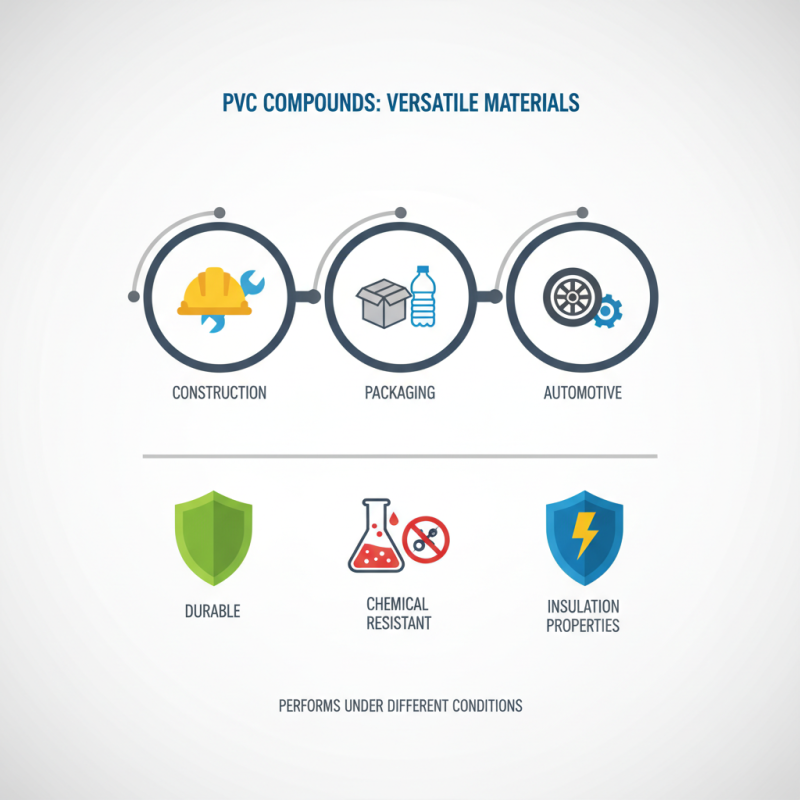
PVC compounds are versatile materials commonly used in various projects. Their properties make them suitable for applications in construction, packaging, and automotive industries. PVC is durable, resistant to chemicals, and has good insulation properties. These traits allow it to perform well under different conditions.

Handling PVC compounds requires understanding their characteristics. The rigidity of standard PVC can be beneficial in structural applications. However, it can also be brittle at low temperatures. Adding plasticizers can enhance flexibility, making them more adaptable. Still, this may compromise their strength, leading to potential issues. It is crucial to evaluate the trade-offs during your project planning.

Effective use of PVC compounds involves proper processing techniques. Understanding temperature control during extrusion is vital. If the temperature is too high, it can lead to degradation. Conversely, insufficient heat may result in poor flow. Experimentation is often necessary to find the right balance. These factors highlight the importance of careful consideration and testing when using PVC compounds in your projects.

Selecting the Right PVC Compound for Your Project

Selecting the right PVC compound can significantly influence the success of your project. PVC, or polyvinyl chloride, is a versatile material used in various applications. According to a recent report by the Plastics Industry Association, the demand for PVC compounds is projected to grow by 3% annually through 2026. This growth reflects the increasing need for durable and cost-effective materials across multiple industries.

When choosing a PVC compound, consider the specific requirements of your project. Factors such as temperature resistance, flexibility, and chemical exposure are crucial. The Vinyl Institute suggests that around 50% of PVC usage is in construction, illustrating its importance in areas like pipes and window frames. However, not all PVC compounds are suitable for every application. Some may lack the necessary durability or resistance features.

It’s essential to evaluate the environmental impact of your chosen PVC compound as well. While PVC has many benefits, its production and disposal do pose challenges. A recent sustainability report indicates that only 9% of PVC is recycled. This raises questions about long-term sustainability. Reflecting on these aspects can help you make an informed decision that aligns with both your project’s needs and environmental considerations.

2026 PVC Compound Selection for Various Applications

This bar chart illustrates the suitability of different PVC compounds for various applications based on their performance in projects. The categories include flexibility, durability, weather resistance, and cost-effectiveness.

Techniques for Processing PVC Compounds Effectively

Processing PVC compounds effectively requires a thorough understanding of both the material and its applications. According to a recent market report, the global demand for PVC is projected to reach 50 million tons by 2026. This growth calls for improved processing techniques to enhance performance and sustainability.

One effective technique is the use of advanced mixing methods. Properly combining ingredients can significantly influence the final product's properties. Ball milling and high-shear mixing are popular choices. They ensure a homogenous blend but require careful control. Too much energy can degrade the material, leading to undesirable characteristics. Additionally, keeping temperatures within optimal ranges is crucial. High temperatures can cause denaturation and reduce performance.

Another consideration is the choice of additives. Up to 30% of a PVC compound can consist of additives that enhance properties. However, a lack of understanding can lead to imbalances, affecting durability and flexibility. Implementing a systematic approach to add each component can mitigate this risk. It's vital to test various formulations and document results. This iterative process may not yield immediate success. Yet, it cultivates a deeper knowledge of material behavior and future application possibilities.

2026 How to Use PVC Compound Effectively in Your Projects? - Techniques for Processing PVC Compounds Effectively

Technique Description Advantages Applications
Extrusion Melting the PVC compound and forcing it through a die to create continuous shapes. High efficiency and consistency in production; ideal for creating profile shapes. Pipes, sheets, profiles, and tubing.
Injection Molding Injecting melted PVC into a mold to create complex shapes. Suitable for high-volume production with intricate designs. Automotive parts, containers, and fittings.
Blow Molding Forming hollow plastic parts by blowing air into a heated plastic tube. Efficient for producing lightweight, hollow items. Bottles, tanks, and other hollow shapes.
Thermoforming Softening a PVC sheet and forming it over a mold using heat and vacuum. Cost-effective for low-volume production runs. Packaging, trays, and protective covers.
3D Printing Using melted PVC filament to build parts layer by layer. Flexibility in design and rapid prototyping capabilities. Prototyping, customized parts, and artistic applications.

Common Applications of PVC Compounds in Various Industries

2026 How to Use PVC Compound Effectively in Your Projects?

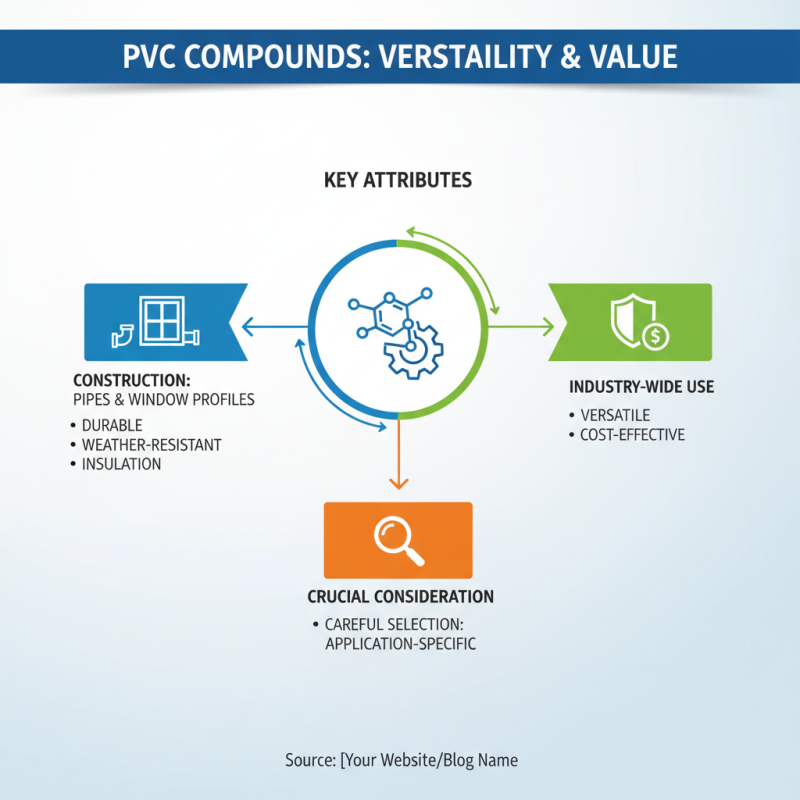
PVC compounds are widely used in various industries due to their versatility and cost-effectiveness. In construction, PVC is a popular choice for pipes and window profiles. These products are durable and resistant to weathering. Additionally, they provide excellent insulation properties. However, careful selection is crucial. Not all PVC compounds are suitable for every application.

In the automotive sector, PVC is often found in interior components. Dashboard covers and seat upholstery utilize its flexibility and strength. These materials must meet specific safety standards. This need for compliance adds complexity to the selection process. There are instances where low-quality PVC can lead to long-term issues, such as fading or cracking. It's essential to evaluate the materials closely.

Packaging is another common application for PVC compounds. They offer clarity and durability, making them ideal for food and consumer products. Yet, using PVC in food packaging raises concerns about safety and environmental impact. The industry must continuously reflect on these challenges. As we innovate, it’s vital to balance functionality with sustainability.

Safety Considerations When Working with PVC Materials

When working with PVC materials, safety should be your priority. Always wear appropriate personal protective equipment (PPE). This includes gloves, goggles, and masks. Exposure to PVC dust can be harmful. Proper ventilation in your workspace is crucial. Use tools that reduce dust generation.

It's essential to handle PVC with care. Cutting or welding PVC creates fumes that may be toxic. Ensure you understand the correct safety measures. Take breaks to avoid prolonged exposure. If you're sensitive to chemicals, consult safety data sheets (SDS) before starting.

Disposing of PVC also requires attention. Check local regulations on waste disposal. Improper disposal may lead to environmental issues. Reflect on your practices. Are they safe for you and the environment? Continuously improve your safety measures.