7 Tips for Choosing the Right PVC Sheet?
Choosing the right PVC Sheet is not a simple matter of selecting the thickest option. The correct material must match its working environment, fabrication method, and expected service life. A sheet used for a cleanroom wall faces different demands from one used for a workshop divider or outdoor sign.
“Material selection begins with the application, not the catalog,” says Dr. Tim Osswald, a respected polymer-processing specialist. His point is practical. Before comparing prices, identify exposure to sunlight, moisture, chemicals, impact, heat, and repeated handling. A glossy surface may look attractive, yet it can reveal scratches quickly. A rigid sheet may provide strength, but it can crack when bent too sharply.
Measure twice.
This guide, “7 Tips for Choosing the Right PVC Sheet,” explores the decisions that often determine performance. It considers thickness, density, color stability, surface finish, flexibility, fabrication, and supplier reliability. Each factor can change how the sheet cuts, drills, prints, bends, or survives daily use.
Still, no checklist removes every uncertainty. Product labels can sound similar. Actual performance may vary between manufacturers and production batches. A small sample test is often wiser than a large purchase based on assumptions. Check the sheet under realistic conditions, including the tools, temperature, and cleaning products used in your project.
That step is easy to skip. It is also where many costly mistakes begin. By examining the details closely, buyers can choose PVC Sheet materials with greater confidence, fewer surprises, and a clearer understanding of their limits.
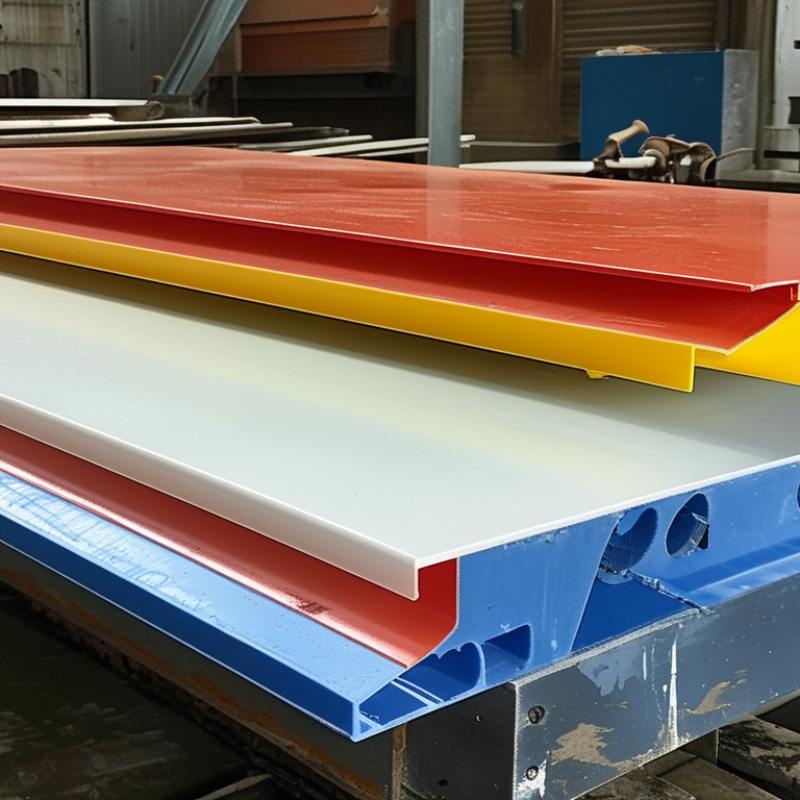
Define the PVC Sheet’s Intended Use and Performance Needs
Choosing the right PVC sheet starts with its intended use, not its color or price. A sheet for indoor partitions may need clean appearance and easy cutting. A sheet for chemical handling needs stronger resistance and stable thickness. These requirements are not interchangeable.
Write down the working conditions before comparing products. Check contact with acids, oils, moisture, sunlight, and cleaning agents. Note the expected temperature range and mechanical load. For a protective cover, impact strength may matter most. For fabrication, machinability, weldability, and dimensional stability become more important. A thin sheet can flex around screw holes. That detail is easy to miss.
Ask for technical data, including thickness tolerance, density, tensile strength, and recommended temperature limits. Industry test methods make comparisons more reliable, but test results may not match your workshop. Request a small sample and cut, drill, bend, or weld it using the planned process. Watch for cracking, warping, discoloration, or rough edges. I have found that a sheet performing well on paper can still disappoint during assembly. Recheck the choice after this trial, especially when outdoor exposure or repeated cleaning is involved. Specification sheets help. Actual handling teaches more.
7 Tips for Choosing the Right PVC Sheet: Define the Intended Use and Performance Needs
| Tip |
Intended Use |
Key Performance Need |
Recommended PVC Sheet Characteristics |
Selection Questions |
| 1 |
Indoor wall cladding and partitions |
Easy fabrication, clean appearance, and dimensional stability |
Rigid PVC sheet with a smooth, uniform surface; select a suitable thickness to limit bending over the intended span |
Will the sheet be cut, drilled, bonded, or mechanically fastened? Is a decorative surface required? |
| 2 |
Chemical-resistant equipment liners and laboratory protection |
Resistance to the specific chemicals, concentration, temperature, and exposure time |
Select PVC based on documented chemical compatibility; use a rigid grade with sealed joints where liquid containment is involved |
Which chemicals will contact the sheet, at what temperature and for how long? Has compatibility been verified? |
| 3 |
Moisture-prone areas, splash guards, and hygienic surfaces |
Low water absorption, easy cleaning, and resistance to routine moisture exposure |
Non-porous PVC surface with smooth finish; design seams and edges to reduce water ingress |
Will the sheet face standing water, frequent washing, steam, or only occasional splashes? |
| 4 |
Machine guards, covers, and protective panels |
Impact resistance, stiffness, safe fabrication, and appropriate fire performance |
Choose thickness and grade according to impact and span; verify applicable fire and safety requirements before use |
Could the sheet be struck, exposed to heat, or located near ignition sources? Is visibility needed? |
| 5 |
Outdoor signs, enclosures, and temporary installations |
Resistance to sunlight, temperature changes, wind loading, and moisture |
Use an outdoor-suitable formulation or protective finish; allow for thermal movement and provide adequate support |
How long will it remain outdoors? What are the local UV, wind, temperature, and moisture conditions? |
| 6 |
Electrical barriers and cable-management components |
Electrical insulation, flame performance, and dimensional stability |
Select a grade with documented electrical and flame-performance data appropriate to the application; avoid assuming all PVC sheets perform identically |
What voltage, temperature, enclosure, and regulatory requirements apply to the finished part? |
| 7 |
Fabricated tanks, ducts, and custom assemblies |
Weldability, load capacity, joint integrity, and long-term service temperature |
Choose a fabrication-compatible rigid PVC grade and thickness; confirm welding, bending, support, and pressure limitations |
Will the assembly hold liquid or air pressure? Which joining method will be used, and what inspection is required? |
Important: Confirm the sheet’s technical data, thickness tolerance, operating-temperature range, chemical compatibility, fire classification, and applicable standards with the supplier before final selection. PVC sheet performance varies by formulation, grade, thickness, processing method, and service conditions.
Compare PVC Sheet Types, Thicknesses, and Surface Finishes
Choosing the right PVC sheet starts with the application, not the price. Rigid PVC suits panels, guards, and fabricated parts needing stable dimensions. Foamed PVC is lighter and easier to route, but it dents more easily. Flexible PVC works where bending matters. Check chemical exposure, temperature, impact, and fire requirements before comparing suppliers. Small details matter.
Thickness should match the load, span, fixing method, and machining process. A 1 mm sheet may work as a cover, while a 5 mm sheet offers better stiffness for partitions. However, thicker is not automatically better. It can increase weight, cutting waste, and installation stress. Measure the actual span. Test before ordering. Surface finish also changes performance. Smooth gloss cleans easily but reveals scratches. Matte finishes hide fingerprints and minor marks. Embossed textures improve visual grip, yet they collect dirt in deep patterns. Request samples and inspect color, flatness, edge quality, and finish consistency under real lighting. PlasticsEurope’s Plastics—The Fast Facts 2023 reports 400.3 million tonnes of global plastics production in 2022, highlighting the value of reducing unnecessary material use. A 2024 Grand View Research analysis estimates the PVC market could grow at about 4.5% annually through 2030, although market definitions vary. That uncertainty deserves attention. My earlier mistake was judging sheets by thickness alone. Processing quality and surface selection often decide the final result.
7 Tips for Choosing the Right PVC Sheet
Compare PVC sheet types, thicknesses, and surface finishes before selecting a material for your application.
Typical PVC Sheet Thickness Ranges
The chart shows commonly available thickness ranges for major PVC sheet categories. Actual availability depends on the application, manufacturing process, and required performance.
- Rigid PVC: Suitable for panels, guards, fabrication, and chemical-resistant components.
- Foamed PVC: Lightweight and easy to machine for displays, signage, and interior panels.
- Transparent PVC: Used when visibility, light transmission, or visual inspection is important.
- Flexible PVC: Appropriate for curtains, protective covers, gaskets, and flexible barriers.
- Choose thickness carefully: Thicker sheets generally provide greater stiffness and impact resistance, while thinner sheets reduce weight and material use.
- Select the right surface finish: Gloss finishes improve appearance and cleanability, matte finishes help reduce glare, and textured finishes can improve grip and hide minor scratches.
- Check operating conditions: Confirm chemical exposure, temperature, UV exposure, fire requirements, forming method, and cleaning conditions before purchasing.
Check Chemical Resistance, Temperature Range, and Durability
Choosing the right PVC sheet starts with the chemicals it will meet. Acids, alkalis, salts, and water are usually manageable, but ketones, aromatic solvents, and some chlorinated solvents can cause swelling or cracking. Check ASTM D543 chemical-resistance results, not a generic “chemical resistant” claim. Request test temperature, exposure time, concentration, and weight-change data. Small details matter.
Temperature range is equally important. Many rigid PVC sheets perform well around 0–60°C, but formulation, thickness, load, and ventilation change the result. The Vicat softening test under ISO 306 can indicate heat resistance, yet it does not predict long-term service life. PlasticsEurope’s Plastics—The Fast Facts 2024 reports PVC represented roughly 8% of European plastics demand in 2023. That scale supports its industrial use, not every application. I have seen sheets selected by room temperature alone, then deform near warm piping.
Durability requires more than impact strength. Review tensile data under ISO 527, impact results, UV exposure, and abrasion performance. The European Chemicals Agency’s 2023 polymer-related assessment work also reinforces a practical point: exposure conditions must be documented, because material performance changes with additives and service environments. Ask for batch test records and inspect the sheet edge for voids, warping, or stress whitening. A simple sample test may reveal more than a polished datasheet. Do not skip installation loads. Weighted, supported PVC can fail slowly, even when its laboratory strength looks impressive.
Confirm Quality Standards, Supplier Reliability, and Total Cost
7 Tips for Choosing the Right PVC Sheet
Confirm the sheet’s intended use before comparing prices. A PVC sheet for laboratory walls needs different performance than one for indoor signs. Check thickness, density, surface finish, color stability, and dimensional tolerance. Ask for current test reports, not only a sales promise. Quality standards should match the project’s environment and local requirements. Request samples, then inspect the edges, flatness, and surface under practical lighting. Small defects often appear after cutting.
Evaluate supplier reliability through evidence. Ask how batches are inspected and whether inspection records are available. A dependable supplier explains production lead times clearly. They also identify possible delays before accepting an order. Check packaging details, replacement procedures, and technical support. Speak with recent customers when possible. References can reveal more than polished brochures.
Still, I once trusted a familiar-looking certificate too quickly; it was valid, but irrelevant to the application.
Calculate total cost beyond the unit price. Include freight, cutting losses, protective film, storage, installation, and potential replacement. A cheaper sheet may warp, crack, or require extra labor. Compare equivalent specifications, not just similar colors. Ask for a written quotation with tolerances and delivery terms. Confirm whether testing, sample preparation, and custom sizes create added charges. Keep a small cost worksheet. It may expose assumptions you forgot. Also review payment terms and after-sales response time, because slow support can become an expensive project delay.