2026 How to Use PVC Compound for Various Applications?
In today’s manufacturing landscape, PVC compound has emerged as a versatile material for various applications. This synthetic plastic polymer is known for its durability and adaptability. Its widespread use spans industries like automotive, construction, and electrical. The specific formulation of PVC compound can vary, impacting its properties and applications.
Understanding how to effectively use PVC compound is crucial for manufacturers. Its flexibility allows for a range of products, from pipes to flooring. However, achieving the desired performance often requires careful consideration. Not every formulation performs as expected. There are challenges in processing and compatibility that should be addressed.
With the right approach, PVC compound can lead to innovative solutions. Manufacturers can explore its potential beyond traditional uses. Yet, it's important to reflect on the environmental impact of using PVC. Balancing functionality and sustainability remains a key consideration for the future.

Understanding PVC Compounds: Types and Properties
PVC (Polyvinyl Chloride) compounds are versatile materials used in many applications. Understanding the types and properties of these compounds is essential. There are two main types: rigid and flexible. Rigid PVC is often used in pipes and profiles. It is strong and durable. Flexible PVC, on the other hand, is softer and adaptable. It finds use in applications like cables and flooring.
The properties of PVC compounds are noteworthy. They have good resistance to chemicals and moisture. This makes them suitable for various environments. However, not all PVC compounds are created equal. Some may lack UV resistance. In applications exposed to sunlight, this can be a problem. Additionally, the environmental impact of PVC production is a growing concern.
Choosing the right PVC compound requires careful consideration. Properties like temperature resistance and tensile strength should be evaluated. The application’s specific needs must match the compound's strengths and weaknesses. Sometimes, the perfect fit is not available. Users may have to compromise on certain properties to achieve their goals. This reflection is crucial in material selection.
Applications of PVC Compounds in Construction and Architecture
PVC compounds are gaining traction in the realms of construction and architecture. Their versatility makes them suitable for various applications, such as piping, flooring, and cladding. According to a recent industry report, the global PVC market in construction is expected to grow by 5% annually, driven by urbanization trends. Cities require durable and sustainable materials for their infrastructure projects. PVC meets these needs with its resilience and cost-effectiveness.
In architectural applications, PVC provides more than just functionality. It offers great aesthetic options, allowing for vibrant colors and textures. This flexibility has led to a rise in its use for window frames and roofing materials. A study indicated that over 30% of new buildings in urban areas utilize PVC components. However, there are concerns about environmental impact and recycling challenges. Many structures built with PVC end up in landfills. This raises questions about sustainability practices within the industry.
Implementing best practices can help address these issues. Increasing the recyclability of PVC is crucial for a circular economy. Proper disposal and recycling facilities may not be widely accessible yet. Moreover, the focus on innovation in these areas remains critical. The construction industry must balance the advantages of PVC with the need for environmentally friendly practices.
Applications of PVC Compounds in Construction and Architecture
This bar chart illustrates various applications of PVC compounds in construction and architecture, highlighting their significance in different areas such as plumbing, window frames, flooring, and electrical cables.
The Role of PVC in Electrical Insulation and Cable Production
Polyvinyl chloride (PVC) is a vital material in electrical insulation and cable production. Its unique properties make it ideal for protecting wires and cables from external elements. According to the International Society of Plastic Engineers, PVC accounts for over 40% of the global insulated wire and cable market. This underscores its significance in the industry.
The durability of PVC is notable. It offers excellent resistance to moisture, chemicals, and UV radiation. These properties ensure reliable cable performance over time. Industry reports suggest that PVC insulation can extend the lifespan of cables by 25% in harsh environments. However, improper formulations and additives can compromise its effectiveness. This leads to challenges that manufacturers must address to ensure high-quality production.
Moreover, the versatility of PVC in cable applications cannot be overlooked. It can be tailored for use in low-voltage to high-voltage cables. Still, the challenge remains in balancing flexibility and strength. Some manufacturers have reported difficulties in achieving the desired performance attributes without compromising safety standards. As technology evolves, continuous improvements in PVC formulations are essential to meet increasing demands.
Innovative Uses of PVC in Healthcare and Medical Equipment
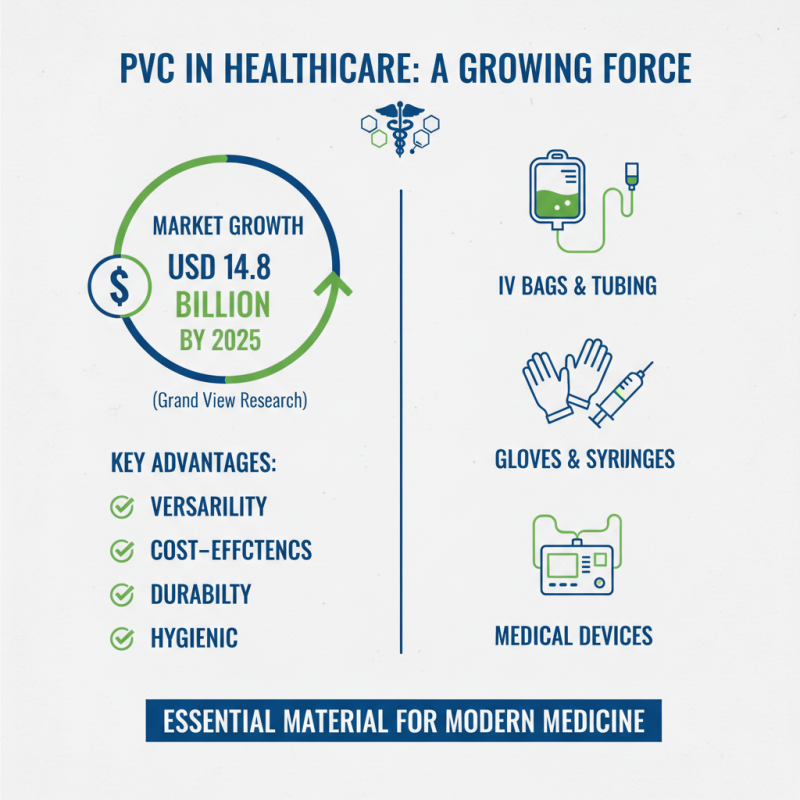
PVC has gained popularity in the healthcare sector due to its versatility and cost-effectiveness. This material is used extensively in manufacturing various medical equipment. According to a report from Grand View Research, the global PVC medical devices market is projected to reach $14.8 billion by 2025, emphasizing its growing importance.
In hospitals, PVC is commonly found in IV bags, tubing, and blood bags. Its flexibility allows for safe handling and transportation of fluids. However, concerns about the environmental impact of PVC production are rising. The production process generates harmful byproducts, prompting a call for greener alternatives. Despite this, PVC’s durability and efficacy in medical applications remain unmatched.
**Tip:** Always consider innovation in PVC recycling. Hospitals can implement recycling programs to mitigate environmental concerns.
Furthermore, PVC’s antimicrobial properties make it ideal for surgical instruments and equipment. A study indicated that PVC surfaces can significantly reduce bacterial growth, enhancing patient safety. Nevertheless, frequent cleaning and maintenance are crucial to maintain these benefits.
**Tip:** Regularly assess and upgrade cleaning protocols. This can ensure optimal performance in healthcare settings.
Overall, PVC's diverse applications in healthcare highlight its role in modern medicine, along with challenges that must be addressed. Balancing efficiency and environmental responsibility will be key for the future.
Sustainability and Recycling of PVC Compounds in Various Industries
PVC compounds are gaining attention for their potential in sustainability. The market for recycled PVC is set to grow, with projections estimating an increase to 8.4 million tons by 2026. This is significant, as recycling can save up to 80% of the energy required to produce virgin PVC. However, challenges remain. The recycling rates for PVC still hover around 10-15% globally, highlighting a need for better collection and sorting methods.
Industries like construction and automotive are exploring PVC's recycled variants. In construction, recycled PVC can be used in tiles, pipes, and insulation. These applications reduce waste and lower material costs. Yet, quality control in recycled products often poses issues. Contaminants can weaken the final product. Continuous improvement is critical for ensuring that recycled PVC meets industry standards.
Consumer awareness plays a vital role in increasing recycling rates. Initiatives that educate the public about PVC's recyclability can drive demand for recycled materials. Additionally, improving end-of-life strategies for PVC products is essential. Currently, a significant amount of PVC ends up in landfills. Recent reports suggest that effective waste management could convert 50% of PVC waste into sustainable solutions. The path to a circular economy for PVC requires collaboration and innovation across industries.
2026 How to Use PVC Compound for Various Applications?
| Application |
Industry |
Properties |
Sustainability Efforts |
Recycling Methods |
| Pipes and Fittings |
Construction |
Durability, Chemical Resistance |
Use of recycled PVC in production |
Mechanical Recycling |
| Windows and Doors |
Building Materials |
Energy Efficiency, Sound Insulation |
Life Cycle Assessment practices |
Chemical Recycling |
| Packaging Films |
Packaging |
Flexibility, Lightweight |
Biodegradable additives |
Energy Recovery |
| Electrical Cables |
Electronics |
Electrical Insulation, Flame Retardant |
Reduced carbon footprint in production |
Closed-loop Recycling |
| Footwear |
Fashion |
Water Resistance, Durability |
Sourcing from sustainable materials |
Post-consumer Recycling |