How to Choose the Right PVC Granules for Your Business?
Choosing the right PVC granules is essential for any manufacturing business. The global PVC market is projected to grow by 4.5% annually from 2022 to 2027, according to market research reports. This highlights the rising demand for quality PVC granules in various applications. Businesses must understand their requirements to select suitable granules.
PVC granules vary in properties like density, color, and additives. An unsuitable choice can lead to production delays and increased costs. For instance, a mismatch in granule type can impair the quality of end products. In contrast, the right selection enhances performance and durability.
Awareness of suppliers' reputation is crucial. Quality control measures and certifications from trusted organizations can serve as benchmarks for reliability. Balancing price and quality is often tricky, leading to potential regret later. Therefore, careful analysis of needs and thorough research on suppliers is critical for making an informed decision.
Understanding the Different Types of PVC Granules Available
Choosing the appropriate PVC granules is crucial for maintaining product quality and cost efficiency. PVC granules vary significantly in terms of their formulation and application. Understanding the differences can significantly impact the production process. According to a report from Research and Markets, the global PVC granules market is expected to reach $7.8 billion by 2025. This highlights the importance of selecting the right type for your needs.
There are several types of PVC granules, each designed for specific applications. Rigid PVC is commonly used in construction and plumbing, while flexible PVC finds its utility in products like cables and flooring. Impact-resistant PVC is ideal for applications that require durability. Consider evaluating the intended use of your products before making a selection.
Tips: Always analyze the specific requirements of your projects. Consulting technical data sheets can provide insight into the properties of various granules. Test small batches before full-scale production to ensure compatibility. Keep in mind that relying solely on price may lead to compromised quality. Check for certifications or standards that can validate the granules’ performance.
Understanding these distinctions ensures you make informed decisions. The right PVC granules can enhance durability, improve processing efficiency, and lower long-term costs. Regularly reassess your suppliers and material types to stay aligned with industry innovations. Adapting to changing demands can facilitate better outcomes for your business.
Assessing the Quality of PVC Granules for Your Applications
When assessing the quality of PVC granules, it is vital to consider several factors. One key aspect is the source of the granules. Quality manufacturers provide detailed specifications, which offer insights into the material’s properties. Look for data sheets that include melt flow index and tensile strength, as these metrics indicate performance capabilities.
Another important factor is the appearance of the granules. Uniformity in size and color suggests a controlled production process. Any discoloration or irregular shape may indicate impurities. Consistency is essential for ensuring reliable processing and final product strength. Pay attention to the smell during handling. Unpleasant odors can signal degradation, compromising the granules' quality.
Finally, always request samples before making a bulk purchase. Testing the granules in actual applications can reveal potential issues. This real-world evaluation is crucial for determining their suitability. Aim for a partner who prioritizes transparency. A trustworthy manufacturer will openly share test results and production methods, enhancing your confidence in their product. Reflect on these factors carefully, as the right choices impact your business success.
Evaluating Supplier Credentials and Product Certifications
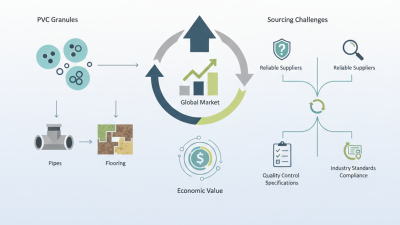
When selecting PVC granules, evaluating supplier credentials and product certifications is crucial. Trustworthy suppliers should have established industry experience. Research their history, client feedback, and market presence. Industry reports indicate that around 70% of plastic manufacturers prioritize supplier reliability. Make sure the supplier has a solid track record.
Certifications often reflect product quality and compliance with industry standards. Look for certifications like ISO 9001 or REACH. Reports show that certified products often exhibit reduced defect rates. It’s essential to verify these certifications independently. Some suppliers may present misleading information. Cross-check with certification bodies to confirm authenticity.
In addition, transparency in sourcing materials is vital. Some granules may originate from recycled sources, impacting quality. Evaluate if the supplier enables traceability. A survey revealed that 55% of businesses face challenges in verifying material origins. Engaging in open dialogue with suppliers can shed light on their practices and reinforce trust. Choose suppliers who prioritize sustainability and ethical sourcing.
How to Choose the Right PVC Granules for Your Business?
This chart illustrates the average quality ratings of different types of PVC granules based on supplier evaluations. The ratings are derived from factors like raw material quality, consistency, and compliance with industry standards.
Determining the Cost-Effectiveness of PVC Granules
When evaluating the cost-effectiveness of PVC granules for your business, one must consider multiple factors. A recent industry report indicates that the average price of PVC granules ranges from $1,200 to $1,800 per ton, depending on quality and application. This variance underscores the importance of assessing specific business needs before making a decision.
Additionally, the long-term durability of PVC products can add to their cost-effectiveness. According to data from the Plastics Industry Association, PVC products can last over 20 years with proper maintenance. This longevity reduces the frequency of replacements, leading to significant savings. However, it’s crucial to balance upfront costs with potential maintenance expenses.
Potential drawbacks of cheaper PVC granules exist too. They may not offer the same strength or UV resistance as higher-quality options. Thus, businesses might find themselves incurring hidden costs in repairs or replacements. It's essential to critically analyze trade-offs. Reliable suppliers often provide testing data to validate claims. Seeking expert insights can lead to better purchasing decisions.
Identifying Sustainable Options for Eco-Friendly PVC Granules
When selecting eco-friendly PVC granules, consider their environmental impact. Look for options made from recycled materials. These can significantly reduce waste and carbon footprint. Sustainable PVC granules often come with certifications that prove their green credentials. Always check the certification details.
Understanding the additives used in these granules is crucial. Some additives might contain harmful substances. Therefore, it’s essential to inquire about their safety and sustainability. Not every supplier discloses this information clearly. Researching and asking questions can help make informed choices.
It's also vital to test various granules in your production process. This can uncover unexpected performance issues. Remember, sustainable granules might behave differently than traditional ones. Finding the right balance between sustainability and product quality is essential. Being open to adjustments in your approach can lead to better results.
How to Choose the Right PVC Granules for Your Business? - Identifying Sustainable Options for Eco-Friendly PVC Granules
| Grade |
Application |
Sustainability Rating |
Recyclability |
Color Options |
| PVC-U |
Pipes and Fittings |
High |
Yes |
Opaque |
| PVC-C |
Chemical Resistant Applications |
Moderate |
Yes |
Clear |
| PVC-M |
Flooring and Wall Coverings |
High |
Yes |
Varied |
| Flexible PVC |
Medical Equipment and Packaging |
Low |
No |
Transparent |
| Eco-Friendly PVC |
Sustainable Packaging Solutions |
Very High |
Yes |
Natural |