
Choosing the right PVC Compound supplier is more than comparing prices on a spreadsheet. It affects product safety, processing stability, delivery schedules, and long-term customer trust. A supplier’s sample may perform well in the laboratory, yet fail during continuous extrusion. That gap deserves attention.
Grand View Research valued the global PVC market at approximately USD 42.7 billion in 2023 and expects continued growth through 2030. The report highlights construction, healthcare, packaging, and electrical applications as important demand areas. This expansion increases supplier choices, but it also increases selection risks. A capable supplier should provide consistent melt flow, hardness, color control, filler dispersion, and batch-to-batch traceability. Request recent technical data sheets, safety documentation, quality records, and production samples from the same batch. Small details matter. A dusty pellet bag can signal poor handling.
PVC industry specialist Dr. Patrick Thomas offers a useful reminder: “A material supplier must understand the application, not only the specification.” That principle deserves practical testing. Ask whether the supplier has experience with your equipment, tooling, climate, and end-use requirements. Review ISO 9001 systems, complaint response times, and change-control procedures. Independent reports from MarketsandMarkets also identify performance requirements and application-specific formulations as major factors shaping PVC demand. However, market reports cannot replace a plant trial. I have seen supplier evaluations focus too heavily on catalog claims. That is a weakness. The strongest decision combines documented expertise, transparent communication, verified testing, and evidence from actual production.
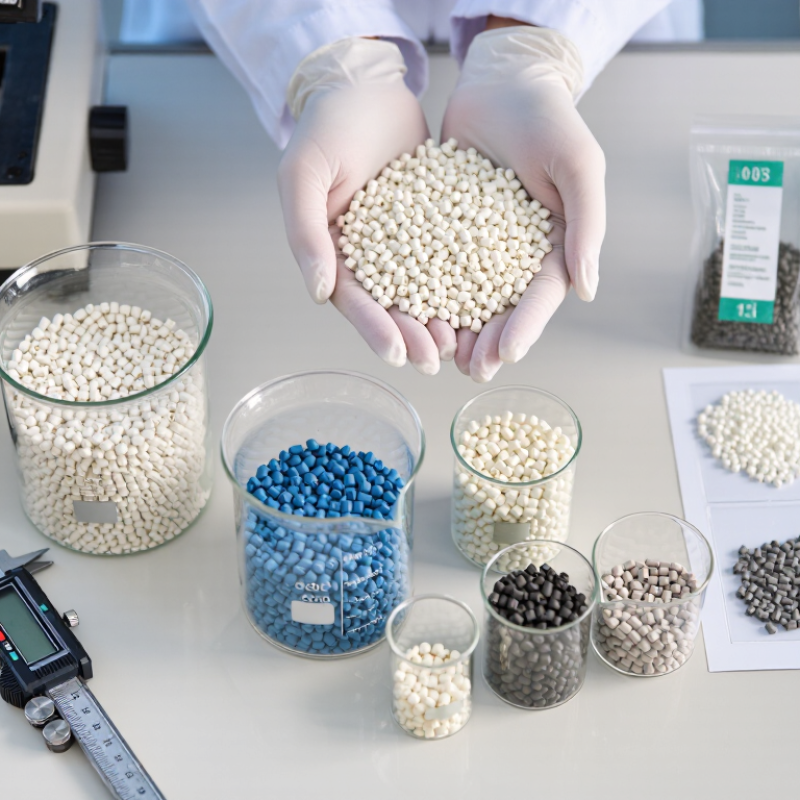
PVC compounds are not interchangeable. Rigid PVC suits pipes, profiles, and electrical housings. Flexible PVC fits cables, seals, flooring, and medical tubing. Plastisol compounds behave differently again, especially during coating and heat fusion. The application decides the formulation.
Start with service conditions, not price. Record operating temperature, hardness, color, flame performance, migration limits, and weather exposure. A cable jacket may need stable insulation after repeated bending. A window profile may need impact strength after years of sunlight. According to the VinylPlus 2023 Progress Report, Europe recycled more than 810,000 tonnes of PVC in 2022. This highlights a practical question: can the supplier provide recycled-content grades without weakening process stability? The answer needs test evidence.
Ask for batch data, not attractive promises. Request tensile strength, elongation, Shore hardness, density, thermal stability, and lot-to-lot variation. Relevant ASTM or ISO methods should appear on the test report. For regulated applications, review migration and traceability documents carefully. A compound that runs smoothly for one shift may fail after humidity changes. I have seen this overlooked. Supplier selection should include pilot extrusion, aging tests, and processing support. Grand View Research identifies construction and electrical uses as major PVC demand areas, but market size alone cannot predict your production result. Sometimes the cheapest grade creates more scrap. That lesson is easy to learn late.
How to Choose the Right PVC Compound Supplier?
A reliable PVC compound supplier should prove quality through consistent production, not attractive promises. Request current certificates, including ISO 9001 for quality management and relevant environmental or regulatory documentation. Check whether the certificates match the actual factory, product scope, and expiration dates. Documents are only evidence. Ask for recent certificates of analysis, safety data sheets, and compliance declarations for each compound grade.
Production standards deserve close attention. During a factory audit, examine raw material storage, weighing records, mixing controls, extrusion conditions, and laboratory equipment. Look for clear batch numbers on bags and complete traceability from incoming resin to shipment. A dependable supplier should test hardness, tensile strength, color, density, and thermal stability according to agreed methods. Retained samples can help investigate complaints months later. Small gaps matter.
Supplier reliability also appears in ordinary details. Can the technical team explain a failed test without blaming the customer? Do quality reports arrive before shipment? Are process changes communicated and approved? A polished factory may still have inconsistent feeding or weak calibration routines. I have found that supplier evaluations can focus too heavily on certificates and miss daily production discipline. A better review combines records, sample testing, site observations, and customer references. The strongest decision comes from repeated evidence across several batches, not one impressive inspection day.
Practical supplier-evaluation scorecard for PVC compound procurement. The benchmarks below are recommended purchasing controls; the applicable requirements should always be confirmed against the product specification, end use, and destination market.
| Evaluation Dimension | Weight | What to Verify | Relevant Standard or Evidence | Recommended Acceptance Benchmark | Priority |
|---|---|---|---|---|---|
| Quality Management System | 15% | Whether quality responsibilities, documented procedures, internal audits, corrective actions, and customer-complaint controls are implemented. | Valid ISO 9001 certificate issued by an accredited certification body; certificate scope should cover PVC compound manufacturing or related polymer processing. | Certificate is valid, scope is relevant, surveillance audits are current, and major nonconformities are closed within the agreed corrective-action period. | Critical |
| Environmental Management | 8% | Control of waste, emissions, energy use, material handling, and environmental incidents. | ISO 14001:2015 certification or documented equivalent environmental-management controls; applicable permits and waste records. | No unresolved regulatory enforcement issue; production waste is identified, controlled, and legally managed. | High |
| Occupational Health and Safety | 5% | Controls for PVC resin, additives, dust, heat, machinery, chemical storage, and worker exposure. | ISO 45001:2018 certification or equivalent documented risk-assessment and safety-management procedures. | Current risk assessments, training records, emergency procedures, and incident-monitoring data are available for review. | High |
| Regulatory and Market Compliance | 15% | Whether the compound is suitable for the buyer's destination market and end-use restrictions. | REACH Regulation (EC) No. 1907/2006 declarations where applicable; EU RoHS Directive 2011/65/EU and Delegated Directive (EU) 2015/863 for applicable electrical and electronic uses. | A signed compliance declaration is supported by current formulation review and test reports from a competent laboratory when required. | Critical |
| Material Formulation Control | 12% | Control of PVC resin grade, plasticizers, stabilizers, pigments, fillers, lubricants, and recycled content. | Approved formulation, controlled bill of materials, incoming-material specifications, supplier-approval records, and revision history. | Only approved materials are used; formulation changes require documented review and customer notification before implementation. | Critical |
| Product Specification Consistency | 15% | Repeatability of physical, mechanical, thermal, electrical, and processing properties between production lots. | Lot-specific certificate of analysis containing agreed parameters such as density, hardness, tensile properties, elongation, color, ash or filler content, and processing behavior. | Results meet the approved specification for every shipment; statistical trends are monitored and out-of-specification lots are segregated. | Critical |
| Testing Capability | 10% | Availability and calibration of laboratory equipment for routine release testing and product-development verification. | Calibration records traceable to recognized standards; test methods identified in the product specification. ASTM D1784 may be relevant for rigid PVC compound classification. | Critical release tests are performed internally or by a qualified external laboratory, with retained samples and test records linked to the lot number. | Critical |
| Flammability Performance | 7% | Suitability for applications requiring documented flame performance. | UL 94 classifications such as HB, V-2, V-1, or V-0 may be relevant; classification depends on the tested material, specimen thickness, and test conditions. | The required classification is confirmed using a report for the actual compound or an equivalent approved formulation and thickness range. | Application-Based |
| Production Process Control | 8% | Control of weighing, dry blending, compounding, cooling, pelletizing, contamination prevention, and packaging. | Process flow diagram, operating instructions, inspection checkpoints, preventive-maintenance records, and documented control plans. | Critical process parameters have defined operating limits; deviations are recorded, investigated, and approved before product release. | High |
| Traceability and Recall Readiness | 5% | Ability to identify raw materials, production conditions, test results, packaging, and shipment records for each lot. | Unique lot numbering, batch records, raw-material links, retained samples, and documented recall or withdrawal procedure. | The supplier can trace one finished lot to its raw materials and shipment records within one business day during an audit or mock-traceability exercise. | High |
| Change-Control Discipline | 5% | Management of changes to formulation, raw-material source, equipment, manufacturing location, test method, or packaging. | Formal change-control procedure with risk assessment, validation plan, approval record, and customer-notification process. | No material change is made without documented technical review; the buyer receives advance notice when the change may affect agreed performance. | Critical |
| Capacity and Delivery Reliability | 5% | Actual production capacity, lead-time stability, safety-stock policy, and ability to support forecast changes. | Capacity statement, production schedule, on-time-delivery history, contingency plan, and documented equipment-maintenance strategy. | Capacity is demonstrated against forecast demand, with an agreed lead time, escalation path, and documented business-continuity plan. | High |
| Technical and Customer Support | 5% | Speed and quality of assistance with processing trials, troubleshooting, specifications, and nonconformance investigations. | Named technical contact, sample-development process, complaint-response procedure, root-cause analysis, and CAPA records. | Technical inquiries receive an agreed response within one business day; formal corrective-action reports identify root cause and preventive action. | High |
| Total Evaluation Weight | 100% | Suggested decision rule: approve only suppliers that meet all critical criteria and achieve at least 80% of the total weighted score. | |||
Note: Certifications verify management systems, not automatic product conformity. Product performance must still be confirmed through an approved specification, representative samples, lot testing, and application-specific validation.
Choosing the right PVC compound supplier requires more than comparing price lists. Ask how the supplier develops formulations for your processing method, product geometry, and service conditions. An experienced team should discuss melt flow, hardness, thermal stability, flame performance, and color consistency with specific examples. Request trial records, test methods, and lot-to-lot data. Vague promises are not technical evidence. A reliable supplier can explain why a formulation changes, not merely offer a standard grade.
Customization matters when a standard compound creates defects. Share measurable details, such as a 1.5 mm wall, extrusion speed, cooling temperature, or surface gloss target. The supplier should recommend controlled adjustments rather than adding unnecessary ingredients. Small changes can affect shrinkage, odor, torque, and weldability. Pilot batches reveal more than polished presentations. Still, customization can become expensive if every revision lacks a documented reason. That is a common trap. Ask for a formulation change log, approval samples, and defined acceptance limits before production.
Technical support should continue after delivery. During a plant trial, a qualified engineer may review feeder settings, barrel temperatures, screw speed, and pellet drying conditions. PVC processing problems are not always caused by the compound. Good troubleshooting separates material issues from equipment or process variation. Response time matters when a production line is stopped. Set a named contact and escalation path. Also check whether certificates, safety data, and traceability records arrive with each shipment. No supplier gets every recommendation right. Require transparent testing and challenge confident advice.
Choosing the Right PVC Compound Supplier
When comparing PVC compound suppliers, study more than the price per kilogram. Ask what the quote includes: additives, color matching, packaging, testing, and freight. A low quote can look attractive. It may still hide costly exclusions. Request a sample commercial invoice and a clear pricing formula. Check how capacity is reserved during peak months. A supplier with modern equipment may still lack open production slots. Ask for monthly output, backup lines, maintenance plans, and recent capacity records. Numbers matter more than confident promises.
Lead time should be tested, not simply accepted. Request standard and urgent delivery schedules for your actual compound grade. Compare them with your factory’s safety-stock level. A two-week promise means little without shipment history. Review on-time delivery data, batch consistency, complaint handling, and contingency procedures. Ask how quickly they communicate after a raw-material delay. Production reviews often reveal reliability through small details, such as accurate labels and advance notices. However, one good delivery proves nothing. Evaluate several orders across busy and quiet periods.
Tips:
Use a trial order before signing a long contract. Measure delivery dates, melt flow, hardness, color, and packaging condition. Ask for a written service-level agreement. Leave room for honest review; your demand forecast may also be wrong. A supplier should discuss uncertainty openly, not promise perfection. Confirm who approves formula changes and who pays for rejected material. Keep records. They protect both sides.
How to Choose the Right PVC Compound Supplier?
Verifying Suppliers Through Samples, Testing, and Long-Term Partnerships
A supplier’s sample is only a starting point. Request enough material for repeated trials, not just one laboratory test. In production, I compare melt behavior, color stability, surface finish, hardness, and processing temperature. Small differences often appear after several hours of continuous operation.
Ask for a clear specification sheet and a recent certificate of analysis. Confirm the testing methods, tolerances, batch number, and storage conditions. Independent testing can verify tensile strength, density, thermal stability, and aging performance. Do not rely on attractive data alone. A sample may pass perfectly while a later batch behaves differently. I have made that mistake before.
Visit the supplier’s facility when possible. Observe raw material storage, batch tracking, mixing controls, and quality records. Ask how they handle complaints and production changes. Reliable suppliers communicate before changing additives or processing conditions. They also retain samples from each batch for investigation. A written trial report helps both sides identify problems quickly. Keep reviewing performance after approval. A strong partnership grows through transparent records, realistic delivery plans, and technical support during difficult runs. Good results need evidence.