Leave Your Message
-
Phone
-
E-mail
-
Whatsapp

-
Wechat

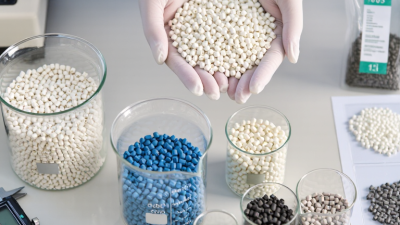
Pvc Compound is a prepared material designed for specific processing and performance requirements. It combines PVC resin with stabilizers, plasticizers, pigments, lubricants, and other carefully selected additives. The final formulation may appear as small, uniform pellets or a dry blend. Manufacturers then shape it through extrusion, injection molding, calendering, or other industrial processes.
This article examines rigid and flexible Pvc Compound types, explaining how their structures affect practical performance. Rigid compounds commonly support window profiles, pipes, wall panels, and electrical housings. Flexible grades can serve cable insulation, flooring, seals, footwear, and certain tubing applications. A rigid profile should resist impact and deformation. A flexible cable coating needs softness, insulation, and reliable aging resistance. These differences make material selection more important than simply choosing the lowest price.
In real production, benefits often include durability, chemical resistance, color consistency, and efficient processing. However, no formulation performs perfectly in every environment. Heat, sunlight, pressure, migration concerns, and recycling requirements can change the result. A compound that works well on a factory line may need adjustment for outdoor exposure. Small formulation changes matter. This guide uses practical manufacturing considerations and established material principles to compare common options. It also highlights testing, supplier documentation, and application-specific standards. One limitation deserves attention: product performance depends on equipment, formulation quality, and operating conditions. Claims should therefore be verified through technical data and controlled testing.
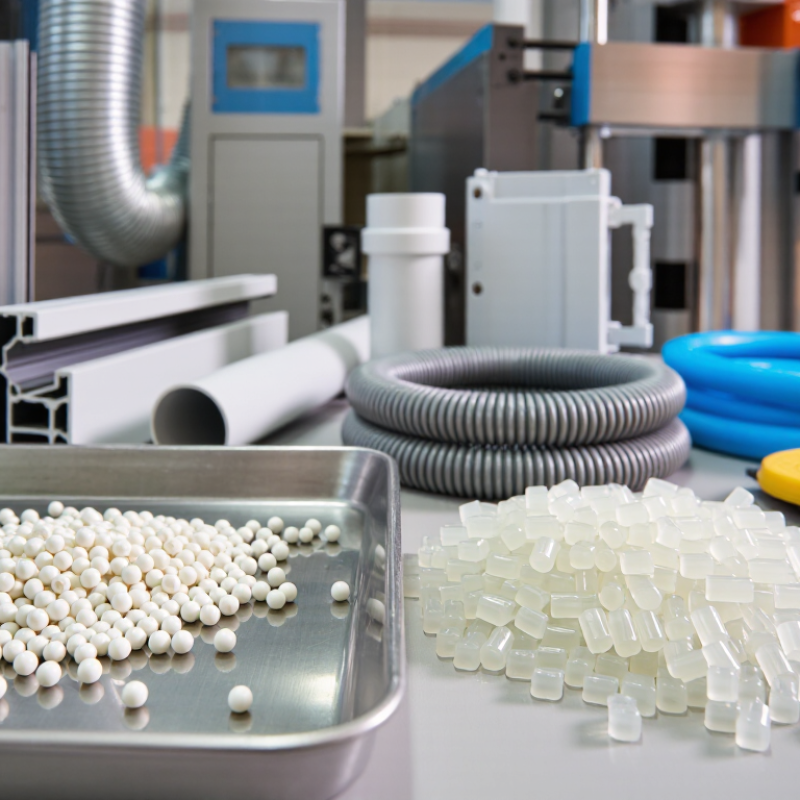
PVC Compound: Definition, Composition, and Core Properties
PVC compound is a formulated material built from polyvinyl chloride resin and carefully selected additives. It starts with resin. Stabilizers improve heat resistance, while plasticizers create flexibility. Pigments provide color, and fillers can reduce cost or increase stiffness. Lubricants support smoother processing. Impact modifiers may improve toughness during installation and service.
Manufacturers adjust the recipe for pipes, cable insulation, flooring, profiles, medical tubing, and automotive components. Rigid compounds usually contain limited plasticizer content and deliver dimensional stability. Flexible compounds use more plasticizer, producing a softer surface and easier bending. Its useful balance is clear: PVC offers corrosion resistance, electrical insulation, flame resistance, and efficient processing. Small changes matter. Mixing temperature, moisture, and additive dispersion can alter the final performance.
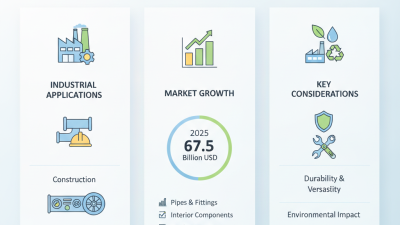
Market demand supports this broad industrial role. Grand View Research estimated the global PVC market at approximately USD 45.9 billion in 2023, with continued growth projected through 2030. The report links demand to construction, infrastructure, packaging, and electrical applications (Grand View Research, PVC Market Size, Share & Trends Analysis Report, 2024). The European Chemicals Agency also identifies plasticizers and stabilizers as important variables in assessing PVC product safety and performance. A practical caveat remains: “PVC compound” is not one universal recipe. Performance depends on formulation, processing history, and service conditions. Some compounds perform well in laboratories but disappoint outdoors. That gap deserves more attention.
| PVC Compound Type | Typical Composition | Key Properties | Common Uses | Typical Shore Hardness | Main Benefits |
|---|---|---|---|---|---|
| Rigid PVC Compound | PVC resin, stabilizers, impact modifiers, processing aids, pigments, and mineral fillers when required | High stiffness, dimensional stability, chemical resistance, and good weatherability with suitable additives | Pipes, fittings, window profiles, siding, electrical conduit, sheets, and construction panels | Approximately 80–90 Shore D | Strong, durable, low-maintenance, and suitable for structural or semi-structural applications |
| Flexible PVC Compound | PVC resin, plasticizers, heat stabilizers, lubricants, pigments, and optional flame retardants or fillers | Flexibility, good electrical insulation, abrasion resistance, and tunable softness | Cables, wire insulation, hoses, gaskets, flooring, synthetic leather, and flexible films | Approximately 50–95 Shore A | Bendable, versatile, cost-effective, and available in a broad range of hardness levels |
| Semi-Rigid PVC Compound | PVC resin with a moderate level of plasticizer, stabilizers, lubricants, pigments, and impact modifiers | Balanced flexibility and stiffness, good impact resistance, and stable shape retention | Packaging sheets, protective covers, cards, trim components, and lightweight profiles | Approximately 70–85 Shore D | Combines handling flexibility with improved rigidity and surface durability |
| Medical-Grade PVC Compound | Carefully selected PVC resin and additives designed for specified biocompatibility, extractables, and sterilization requirements | Clarity options, flexibility, weldability, chemical resistance, and controlled purity | Tubing, fluid bags, blood-storage components, masks, and disposable medical devices | Usually approximately 60–90 Shore A, depending on design | Can provide transparency, flexibility, and reliable processing when regulatory requirements are met |
| Cable and Wire PVC Compound | PVC resin, plasticizers, thermal stabilizers, flame retardants, fillers, pigments, and electrical-performance modifiers | Electrical insulation, flame resistance, flexibility, abrasion resistance, and moisture resistance | Building wire, control cables, power-cable jackets, communication cables, and appliance cords | Approximately 70–95 Shore A | Provides economical insulation and jacket protection with formulation-dependent flame performance |
| Pipe and Fitting PVC Compound | PVC resin, stabilizers, impact modifiers, processing aids, lubricants, pigments, and controlled mineral fillers | Pressure resistance, rigidity, corrosion resistance, low water absorption, and smooth internal surfaces | Water distribution, drainage, irrigation, conduit, wastewater, and industrial fluid handling | Typically approximately 80–90 Shore D | Lightweight, corrosion-resistant, easy to install, and resistant to many aqueous chemicals |
| Flame-Retardant PVC Compound | PVC resin combined with stabilizers, plasticizers where needed, flame-retardant additives, smoke suppressants, and fillers | Improved resistance to ignition and flame spread, with performance dependent on the complete formulation and test method | Cable jackets, electrical enclosures, building products, transport interiors, and technical profiles | Approximately 70–90 Shore A or 75–90 Shore D | Supports fire-performance targets while maintaining PVC’s processing versatility |
| UV- and Weather-Resistant PVC Compound | PVC resin, heat stabilizers, UV absorbers or light stabilizers, pigments, impact modifiers, and processing aids | Improved resistance to sunlight, discoloration, surface degradation, and outdoor temperature changes | Outdoor profiles, siding, roofing membranes, garden products, conduit, and exterior panels | Approximately 75–90 Shore D | Extends outdoor service life and helps preserve color, appearance, and mechanical performance |