Leave Your Message
-
Phone
-
E-mail
-
Whatsapp

-
Wechat

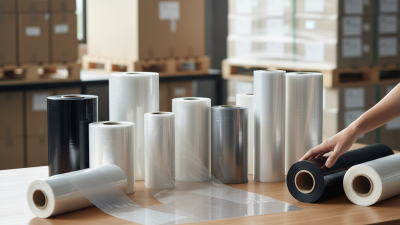
Plastic Film Rolls serve very different purposes, from wrapping a pallet to protecting a product inside a pouch. Their appearance can be misleading. Two clear rolls may behave differently when stretched, sealed, or exposed to moisture. The right choice depends on the product, packing equipment, storage conditions, and required level of protection.
Common options include polyethylene (PE) film for flexible wrapping, polypropylene (PP) film for clarity and a crisp finish, and PVC film for selected wrapping applications. Stretch film clings around cartons and loads; shrink film tightens with heat. Barrier and laminated films combine layers to help limit moisture, oxygen, or odor transfer. Each has trade-offs. A film that looks strong may still puncture at a sharp corner, while a thicker roll may not run smoothly on a particular machine. Not always obvious.
When comparing Plastic Film Rolls, check resin type, thickness, width, roll length, and sealing or stretching performance. Ask how the film handles on the actual packing line, not just in a sample photo. A small trial can reveal wrinkling, weak seals, static, or excess waste. That matters. For food, medical, or other sensitive uses, confirm that the selected grade is suitable for the intended application and verify relevant supplier documentation. No single film is best for every job. Even experienced buyers sometimes focus too much on price per roll and too little on performance per packaged item. This guide compares the main types and explains what to consider before choosing.
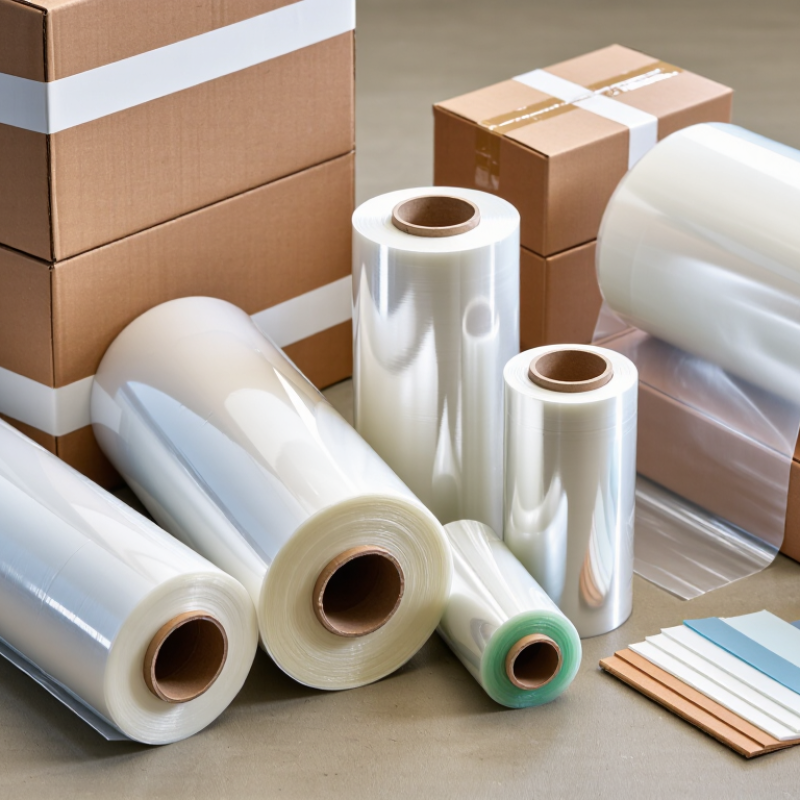
What Are the Top Types of Plastic Film Rolls?
How Plastic Film Rolls Are Defined and Classified
Plastic film rolls are continuous, flexible sheets wound around a core or folded for storage. The term describes a supply format, not one specific material. Film can be made from polyethylene, polypropylene, polyester, or other polymers, each with different properties. Classification often starts with material, then considers thickness, structure, and intended use. That sounds simple. In practice, product labels may emphasize one feature and leave others unclear.
Material helps explain performance. Polyethylene films are commonly used for flexible wrapping and moisture barriers. Polypropylene films can offer clarity and stiffness for packaging. Polyester films are often selected when dimensional stability or heat resistance matters. Films may also be classified as single-layer or multilayer. A multilayer roll combines materials to balance qualities such as strength, sealing ability, and protection from moisture or oxygen. Width, thickness, roll length, and surface treatment further define the product. These categories can overlap, so two rolls with similar names may behave differently.
Tips: Check the material, thickness, and intended application before comparing rolls. Look at the technical data sheet, not just the product name. A small trial can reveal handling issues, such as curling or weak seals. It is easy to overlook storage conditions, too; heat and sunlight may affect some films over time.
| Film Type | Typical Material or Structure | Key Characteristics | Common Applications | How It Is Classified |
|---|---|---|---|---|
| Polyethylene (PE) Film | LDPE, LLDPE, or HDPE; sometimes used in blends | Flexible, moisture-resistant, and heat-sealable. Properties vary by PE grade: LDPE is generally soft and flexible, LLDPE offers good stretch and puncture resistance, and HDPE is typically stiffer. | Stretch and shrink packaging, bags, liners, agricultural covers, and protective wrapping | Classified by polyethylene grade, density, film properties, and intended use |
| Polypropylene (PP) Film | BOPP (biaxially oriented polypropylene) or CPP (cast polypropylene) | BOPP is commonly clear, stiff, and suited to printing; CPP is generally more flexible and often used where heat sealing is required. Both provide useful moisture resistance. | Snack and confectionery packaging, labels, overwrap, and laminated packaging | Classified by manufacturing process and orientation: oriented BOPP or cast CPP |
| Polyester (PET) Film | Usually biaxially oriented PET (BOPET) | Strong, dimensionally stable, and resistant to heat compared with many commodity packaging films. It is often combined with sealant layers in laminates. | Flexible packaging laminates, electrical insulation, printing, and protective films | Classified by resin, orientation, thickness, and surface treatment or coating |
| Polyvinyl Chloride (PVC) Film | Flexible or rigid PVC formulations | Can be clear and conformable, with formulation-dependent flexibility and durability. Its suitability depends on the application and applicable regulations. | Shrink sleeves, labels, protective coverings, and selected specialty packaging | Classified by formulation, flexibility, clarity, and whether the film is designed to shrink |
| Polyamide (PA or Nylon) Film | Commonly oriented nylon film, sometimes combined with other polymers | Offers good toughness and puncture resistance. Nylon can absorb moisture, which may affect its properties and barrier performance. | Vacuum packaging, meat and cheese packaging, and other applications needing toughness | Classified by polyamide type, orientation, thickness, and whether it is part of a multilayer structure |
| Barrier Film | May include EVOH, metallized polymer film, or coated film; often incorporated into a multilayer structure | Designed to reduce transmission of oxygen, moisture, light, or aroma. Barrier performance depends on the material, layer design, and environmental conditions. | Food packaging, pharmaceutical packaging, and products requiring extended protection | Classified by the barrier material and the type of transmission the structure is designed to limit |
| Multilayer Laminated Film | Two or more bonded layers, such as PET/PE or PA/PE | Combines properties from different layers, such as printability, strength, barrier performance, and heat sealing. The exact performance depends on the layer combination and construction. | Stand-up pouches, sachets, food packaging, and industrial flexible packaging | Classified by layer sequence, materials, bonding method, and functional requirements |