Leave Your Message

7 Best PVC Roll Manufacturers for Global Buyers

Choosing a Pvc Roll manufacturer involves more than comparing unit prices. Global buyers also need to assess product consistency, technical support, production capacity, and export experience. The right supplier should explain material options clearly and provide specifications that match the intended use, whether for packaging, protective covers, or interior applications. Details matter. Roll width, thickness, surface finish, and color can affect processing and the final result. A physical sample can reveal issues that a product sheet may not show, such as uneven edges or a finish that feels different under real working conditions.

This guide introduces seven manufacturers for buyers to consider, using practical factors such as product range, quality controls, customization, communication, and delivery capability. These criteria help organize the search, but they cannot replace direct verification. Request current specifications, sample rolls, and relevant quality documentation before placing an order. Confirm packaging and shipping details, too; a suitable product can still arrive inconveniently if roll dimensions or protective wrapping are overlooked. No ranking fits every buyer. Needs vary by market, application, and order size, and supplier information can change over time. Some comparisons may remain imperfect. Treat the list as a starting point, then compare each manufacturer against your own requirements and ask specific questions before making a decision.
7 Best PVC Roll Manufacturers for Global Buyers

Understanding PVC Rolls and Their Global Applications

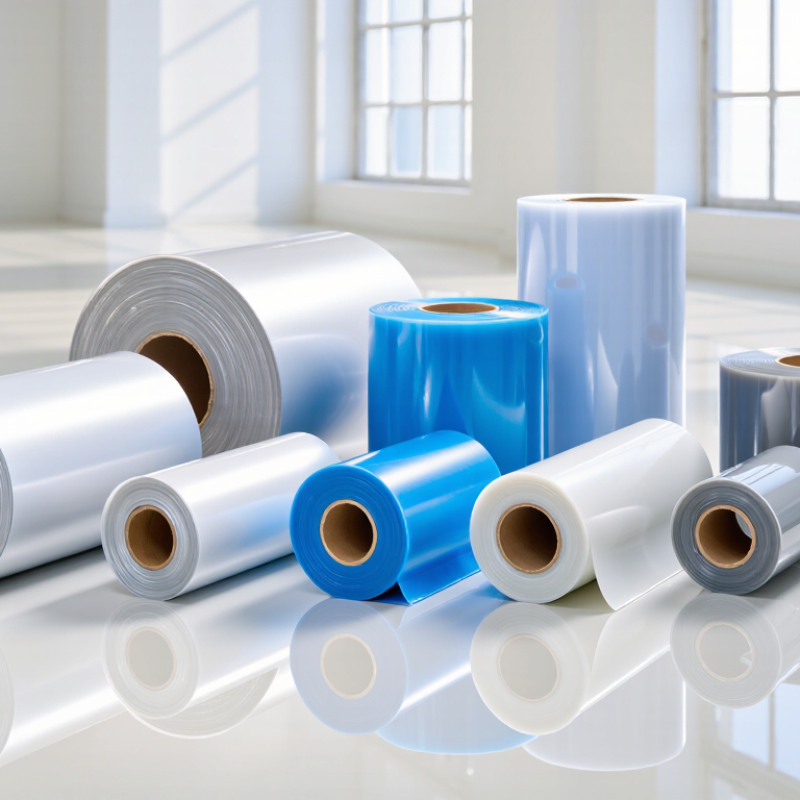
PVC rolls are continuous sheets used where flexible coverage, separation, or surface protection is needed. Their thickness, clarity, texture, and flexibility vary by grade. Clear rolls can shield stored goods while keeping contents visible. Opaque or colored sheets can divide work areas or reduce glare. Textured surfaces may improve grip, but can be harder to clean. Not every grade suits every setting. A sample can still mislead if it is tested only indoors.

Tips: Check thickness, roll width, surface finish, and temperature range against the actual job. Ask for a technical data sheet, then test a sample under expected handling conditions. Pay attention to odor, curling, and how easily the material tears. Small details matter.

Across global markets, PVC rolls are used in packaging, furniture covers, curtains, flooring layers, and industrial screens. Climate and transport can affect performance: heat may soften some grades, while cold can make others less flexible. Confirm that the roll arrives protected from moisture, dust, and crushing. Buyers should also clarify whether the material is intended for indoor use, repeated handling, or brief outdoor exposure. A mismatch may only become obvious after installation.

Key Criteria for Evaluating PVC Roll Manufacturers

When evaluating PVC roll manufacturers, compare more than price and catalog images. Confirm the intended use, such as floor protection, upholstery, or printed displays, before discussing specifications. Ask for the available thickness tolerance, roll width, length, core diameter, surface finish, and color range. A low quote can hide short rolls or inconsistent thickness. Details matter.

Request samples from the same production grade you plan to order. Check flexibility, surface marks, odor, and how the material handles your cutting or printing process. If possible, measure thickness at several points across the roll; one reading is not enough. Ask how production batches are checked and what inspection records can be shared. A sample may look excellent yet reveal uneven winding or surface variation during a larger run. That is easy to overlook.

Tips: Put key specifications and acceptable tolerances in writing. Clarify sample approval, packaging, lead time, and how defects are handled. Ask for recent test data relevant to your application, and verify what each result actually measures. Do not assume a polished brochure proves consistent quality. A small trial order may be useful, though it cannot predict every production issue.

Profiles of Seven Leading PVC Roll Manufacturers

PVC roll manufacturers differ in resin sourcing, calendering control, surface finishing, and order flexibility. Grand View Research estimated the global PVC market at about US$70.1 billion in 2023, with projected annual growth of 3.9% through 2030. This figure covers PVC broadly, not roll products alone. Treat it as market context, not proof of any supplier’s performance.

Seven useful supplier profiles emerge by capability. An integrated producer controls resin and calendering, helping maintain thickness consistency. A packaging-film specialist offers clear, flexible rolls and tighter gauge options. A flooring-grade producer focuses on abrasion resistance and repeatable embossing. A coated-textile manufacturer supplies reinforced rolls for demanding applications. A recycled-content supplier can document feedstock and batch variation. A narrow-width industrial producer suits gasket, lining, or fabrication work. A custom-run specialist handles unusual colors and smaller orders. Not rankings. Capabilities need verification.

Ask for technical data sheets, sample rolls, and test results matching your intended use. Check thickness across the roll, not only at one edge. Also confirm roll width, core size, surface treatment, and storage conditions. A low price may hide inconsistent gauge or unclear recycled-content claims. Details matter. Even strong published specifications cannot replace testing a sample under real production conditions.

7 Best PVC Roll Manufacturers for Global Buyers - Profiles of Seven Leading PVC Roll Manufacturers

The profiles below describe common PVC roll manufacturer types rather than named companies or a verified ranking. Product availability, specifications, certifications, and export capabilities vary by supplier and should be confirmed directly.

Supplier Profile Typical PVC Roll Products Common Applications Potential Buyer Fit Key Points to Verify
Flexible calendered film producer Flexible PVC film and sheet rolls, which may be supplied in clear, colored, printed, or textured finishes. Packaging, stationery, surface covering, and general converting. Buyers seeking roll stock for converting, printing, or lamination. Thickness and width tolerances, surface finish, roll winding, plasticizer information, and sample consistency.
Transparent PVC film specialist Clear flexible PVC film rolls in grades selected for different levels of clarity, flexibility, and handling. Protective covers, visual display materials, flexible windows, and packaging components. Buyers for whom appearance, transparency, and clean surface quality are important. Haze or clarity requirements, surface defects, aging performance, and suitability for the intended use.
Rigid PVC sheet-roll producer Rigid or semi-rigid PVC sheet supplied in roll form where the product format and downstream process allow. Forming, fabrication, protective layers, and selected packaging applications. Processors needing a stiffer PVC material rather than a highly flexible film. Actual flexibility, thickness range, forming behavior, dimensional stability, and compatibility with processing equipment.
Printed and decorative PVC roll converter Printed, embossed, or otherwise surface-finished PVC rolls, often produced to order. Interior finishes, display materials, decorative coverings, and branded packaging components. Buyers requiring a specified pattern, color, texture, or repeat design. Color matching method, print repeat, surface durability, artwork approval process, and minimum order requirements.
PVC geomembrane and waterproofing roll producer Flexible PVC membrane rolls designed for waterproofing or containment applications. Selected roofing, lining, and waterproofing projects, subject to project specifications. Contractors and project buyers sourcing membrane materials for defined installation conditions. Applicable project standards, seam-welding compatibility, weathering data, installation guidance, and test documentation.
Coated-fabric and reinforced PVC roll producer PVC-coated or PVC-laminated textile rolls, with a fabric reinforcement layer that provides a different structure from unreinforced film. Tarpaulins, covers, banners, inflatable products, and selected industrial fabrics. Buyers needing a flexible material with textile reinforcement. Fabric construction, coating adhesion, tear and tensile test methods, seam performance, and coating formulation details.
Custom-compounding and OEM roll supplier Made-to-order PVC rolls developed around customer requirements for color, flexibility, finish, or processing needs. Specialized converting, components, and applications with defined technical specifications. Importers and manufacturers with repeat orders or product-specific requirements. Written specification control, formulation-change notification, batch traceability, production lead time, and quality records.

Comparing Product Quality, Range, and Export Capabilities

For global buyers, PVC roll quality is more than a smooth surface. Compare thickness tolerance, roll width, color consistency, and resistance to heat or outdoor exposure. Ask for technical data sheets and test results tied to the exact grade being quoted. Grand View Research estimated the global PVC market at USD 67.38 billion in 2023. That figure covers the wider PVC market, not roll products alone, so it signals scale—not a supplier’s quality.

Product range matters when projects need clear, colored, embossed, flexible, or rigid rolls. Check whether a manufacturer can hold specifications across repeat orders; a sample may look excellent, while production batches vary. Export capability is equally practical. Review packing details, roll-core strength, shipment lead times, export references, and how the supplier handles damaged goods or delayed paperwork. Ask for recent shipment records where available.

Tips: Request one sample roll and measure it on arrival. Confirm net weight, thickness, and usable width in writing. Compare quotations on the same specification, not just price per roll. One weak point: supplier-provided test data may not be independently verified, so consider third-party testing for large orders.

How Global Buyers Can Choose the Right PVC Roll Supplier

Choosing a PVC roll supplier starts with the application, not the lowest quotation. Define the required thickness, width, color, finish, and working environment. A roll used for indoor display may need different flexibility and surface protection than one exposed to sunlight. Small checks matter.

Ask suppliers for a written specification and a sample from the production grade you plan to order. Measure thickness at several points with a caliper, and inspect the edges for waviness or uneven winding. Bend a sample in the expected temperature range. A brief check cannot predict years of use, but it can reveal obvious mismatches.

Review how the supplier handles quality control, packaging, lead times, and repeat orders. Request relevant test reports, then confirm that they apply to the exact material and specification being quoted. Ask how defects are recorded and resolved. Clear answers are useful; vague promises are not. Pricing deserves scrutiny too. A low quote may exclude protective wrapping or careful loading, details that matter when rolls arrive with creased edges. Compare the full delivered cost, and leave room for a small trial order before committing to larger volumes. Sourcing takes time. That is sometimes frustrating, but rushing the specification can cost more later.