Choosing a Pvc Film Sheet in 2026 means matching the material to its actual job, not simply choosing the lowest price. Packaging needs clarity, reliable sealing, and consistent thickness. Protective covers may need flexibility, abrasion resistance, or outdoor durability. A glossy sample can look convincing under showroom lights. It may behave differently after months of handling or exposure.
Market context helps, but it has limits. Grand View Research’s Polyvinyl Chloride Market Size, Share & Trends Analysis Report estimated the global PVC market at USD 67.6 billion in 2023 and projected a 3.7% compound annual growth rate from 2024 to 2030. That figure covers PVC broadly, not film sheets alone. It signals an established, changing materials market—not a guarantee that every grade suits every use. Small differences in thickness, plasticizer content, surface finish, and processing can affect performance. Details matter.
This guide compares common PVC film sheet options through practical selection factors: application, thickness, flexibility, transparency, printability, and expected service conditions. Check technical data sheets, sample the material in the intended setting, and confirm supplier specifications before ordering. A desk test is useful, but incomplete. Real-world performance can surprise you; even a well-chosen sheet may require compromise between clarity, toughness, and cost. The best choice is the one supported by evidence for your particular use.
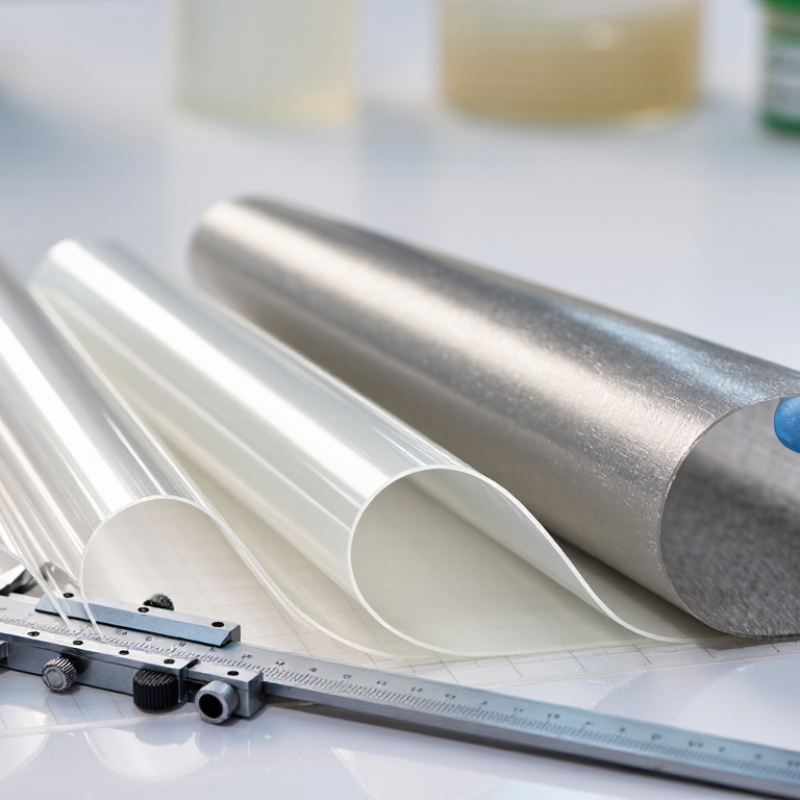
PVC film and PVC sheet are forms of polyvinyl chloride, a material available in flexible and rigid grades. Film usually describes thinner material that bends readily, while sheet often refers to thicker stock that keeps its shape. These terms are not used identically by every supplier, so check the stated thickness and grade.
A typical density for rigid PVC is 1.3–1.45 g/cm³. Density means mass per unit volume; it helps estimate weight, but does not by itself tell you how strong or impact-resistant a sheet will be. For example, one square metre of 1 mm rigid PVC weighs roughly 1.3–1.45 kg before manufacturing tolerances are considered. A useful estimate. In practice, additives, fillers, and production tolerances can shift the actual value. The number needs context.
When comparing material for a sign panel, equipment cover, or fabricated part in 2026, read the technical data sheet rather than relying on the word “rigid.” Check density alongside thickness, temperature limits, and the intended processing method. If weight matters, request a measured value for the exact grade. Density is a helpful starting point, not the whole decision. I would not choose a sheet on density alone.
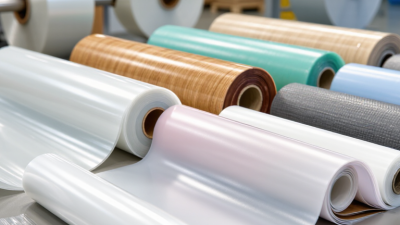
Which PVC Film Sheet Is Best for Your Needs in 2026?
Flexible and rigid PVC sheets differ mainly in plasticizer content and hardness. Flexible grades often contain about 20–50 parts plasticizer per 100 parts resin; rigid grades typically contain little or none. These are common formulation ranges, not universal specifications. Feel matters. A soft sheet can bend around a tight corner, while a rigid sheet resists dents on a flat panel.
Shore readings help narrow the choice, but compare like with like. Flexible PVC is commonly assessed on Shore A, while harder grades are often tested on Shore D. ASTM D2240 describes durometer testing; its readings depend on factors such as specimen thickness and test conditions. Ask suppliers for the test method and actual sheet data, not just “soft” or “rigid.” A number without context can mislead.
Grand View Research valued the global PVC market at about $70.4 billion in 2023, reflecting the material’s broad use, not a preferred hardness. For a curtain, gasket, or flexible cover, check bend performance and plasticizer details. For a sign or protective panel, compare Shore D hardness and impact resistance. Less plasticizer often means greater stiffness, but it does not guarantee better service life. I would still test a sample in its real setting; that extra step is easy to skip, and regrettable later.
| PVC Film or Sheet Grade | Typical Plasticizer Content | Indicative Shore Hardness | Typical Feel and Performance | Common Uses | Best Fit When You Need |
|---|---|---|---|---|---|
| Rigid PVC (uPVC) | Usually 0 phr; some formulations use a small amount, generally under about 5 phr. | Typically Shore D 75–85. | Firm, shape-retaining, and resistant to bending compared with plasticized PVC. | Rigid panels, covers, protective guards, and formed components. | Dimensional stability and stiffness are more important than drape or flexibility. |
| Semi-rigid PVC | Approximately 5–20 phr. | Often around Shore A 85–95; results depend on formulation and test method. | Some bend and impact compliance while retaining more shape than flexible grades. | Folding covers, flexible panels, sleeves, and formed sheet components. | A compromise between easier handling and moderate stiffness. |
| Firm flexible PVC | Approximately 20–35 phr. | Often around Shore A 75–90. | Bendable and resilient, with more body than softer flexible film. | Protective curtains, trim, coated fabrics, and flexible coverings. | Repeated bending is needed, but the sheet should not feel especially soft. |
| General-purpose flexible PVC | Approximately 30–50 phr. | Often around Shore A 65–85. | Flexible, conformable, and available in a broad range of thicknesses and finishes. | Flexible sheet, covers, liners, and general-purpose film applications. | You need a practical balance of flexibility, handling, and shape retention. |
| Soft flexible PVC | Approximately 50–80 phr or more in very soft formulations. | Often around Shore A 50–70. | Soft and highly pliable; formulation can influence tack, stretch, and low-temperature behavior. | Soft film, flexible mats, cushioning layers, and pliable covers. | Conformability and a soft feel are priorities. |
Reading the ranges: Plasticizer content is shown as parts per hundred resin (phr). These are indicative formulation ranges, not universal specifications; additives and resin choice affect the finished material. Shore A is commonly used for softer PVC and Shore D for harder PVC. Values from different Shore scales should not be compared directly, and hardness results depend on specimen thickness, conditioning, and test procedure. Confirm the supplier’s data sheet and test method before specifying a grade.
PVC thickness is not a cosmetic choice; it changes drape, stiffness, handling, and edge behavior. Film commonly runs from 0.05 to 1 mm, while sheet usually spans 1 to 10 mm. At 0.05 mm, film can wrap around tight curves, but rough handling may wrinkle or puncture it. Near 1 mm, it behaves more like a firm panel than loose wrapping. Not magic. Treat these ranges as a starting point, and check product tolerances before ordering.
For covers, sleeves, and light curtains, thinner film is often easier to fold and cut. For guards, dividers, and fabricated panels, thicker sheet offers more rigidity, though it adds weight and can complicate drilling. Measure the unsupported span, expected contact, and mounting points. A sample is useful: bend it by hand, inspect the cut edge, and test it in the intended room temperature. I would not choose thickness from a product photo alone.
Industry figures give useful context, but do not dictate gauge. PlasticsEurope’s Plastics—The Fast Facts 2024 reports 413.8 million tonnes of global plastics production in 2023. VinylPlus’ 2024 Progress Report records 737,645 tonnes of PVC recycled in Europe that year. Neither figure tells you which thickness will work. They do make it sensible to ask about offcut waste, material identification, and available local collection routes before specifying a format.
A PVC film sheet can look flawless under warehouse lighting and still behave poorly in use. A flexible cover may need to stretch without tearing, while a display panel may need to keep printed details sharp. Start with the job, not just the gloss. Small differences matter.
ASTM D882 measures tensile properties of thin plastic sheeting, including tensile strength and elongation. Ask for the test direction, specimen thickness, and test speed; results can change with these conditions. Film may also stretch differently along and across the roll. ASTM D1003 measures haze and light transmission. Haze describes light scattered through the sheet, so a low value usually means a clearer view, but it does not describe every aspect of visual quality.
Compare test reports using the same methods and similar sample conditioning. Then check the film in a realistic setup: lay it over the intended print, bend it around the actual edge, or view it under the lighting used onsite. A single lab result is not a guarantee. I would also question unusually precise claims when the report omits thickness or direction. Slight surface texture, handling marks, and mounting pressure can change what the eye sees.
Start with the exposure. PlasticsEurope’s Plastics—The Fast Facts 2024 reports that PVC represented 12.6% of global plastics production in 2022. That scale does not make every sheet suitable. For chemical contact, check the exact chemical, concentration, contact time, and temperature against the supplier’s test data. ASTM D543 provides methods for evaluating plastics’ resistance to chemical reagents. A quick splash and a week-long soak are different jobs.
Match the grade to its real service temperature, not a brief peak. Ask for a continuous-use range and consider whether heat, load, or tight bends will act together. For outdoor use, request weathering results relevant to the intended exposure; ASTM G154 describes fluorescent UV-lamp exposure practices. A clear sheet may discolor or lose toughness over time. There is no universal UV lifetime.
Compliance starts with the application and destination market. For food-contact use, request documentation covering the specific formulation and conditions of use; a generic “food-safe” claim is not enough. Keep the grade designation, test conditions, and declaration with the purchasing record. One detail is easy to miss: printed sheet data may describe a standard sample, not your finished part. Check the converted component, too.
Compare representative upper continuous service temperatures, then check chemical exposure, UV conditions, and compliance requirements for your specific application.
How to use this chart: PVC-U and flexible PVC are commonly used up to about 60°C, while CPVC compounds may be suitable for continuous service up to about 90°C. These are representative upper limits, not guarantees; formulation, load, exposure duration, and product construction affect performance.
Before choosing: Check a grade-specific chemical compatibility chart for the chemical, concentration, and temperature involved. For outdoor use, confirm the sheet is formulated for UV exposure. Verify required food-contact, fire, building, or other regulatory documentation for your application and region.