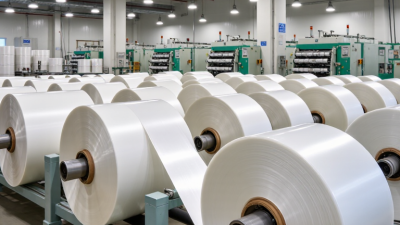
Choosing the best PVC Film Sheet supplier requires more than comparing prices on a spreadsheet. The decision affects product appearance, converting efficiency, customer safety, and long-term costs. PlasticsEurope reported global plastics production of approximately 413.8 million tonnes in 2023, showing the scale and competitiveness of this industry. However, market size does not guarantee supplier reliability. A manufacturer may offer attractive samples but struggle with stable thickness, accurate color, or timely delivery.
Look for evidence, not promises. Request technical data sheets showing thickness tolerance, tensile strength, elongation, surface energy, and recommended processing temperature. Ask for batch records and sample rolls from current production. Under warehouse lighting, inspect whether the film has haze, pinholes, edge damage, or uneven gloss. A trustworthy supplier should explain its resin source, plasticizer system, quality controls, and testing equipment. Certifications such as ISO 9001 can support confidence, but they should not replace your own verification. The 2024 Plastics—The Facts report from PlasticsEurope also highlights the importance of circularity and material efficiency across the plastics value chain, making recycled-content claims worth checking carefully.
Cost matters. It is not everything. Compare usable yield, packaging strength, minimum order quantities, replacement policies, and lead times. Ask how the supplier handles a failed roll discovered after lamination. A written corrective-action process is valuable. I have learned that the cheapest PVC Film Sheet can become expensive after rework, downtime, and rejected products. No supplier is perfect. Still, the strongest partner communicates limitations clearly, provides consistent test evidence, and improves when your requirements change. Your final choice should reflect documented performance, practical experience, and transparent accountability.

Before comparing suppliers, define the film your process actually needs. Start with thickness, measured in microns or millimeters. A thin film may suit labels or surface wrapping, while thicker sheets can support fabrication and protection. Do not rely on general terms like “heavy duty.” Request a tolerance range, because a small variation can affect sealing, forming, and cutting.
Width matters more than many buyers expect. Measure the usable width required after trimming, not just the finished product size. Then identify the grade, such as flexible, rigid, clear, opaque, UV-resistant, or flame-retardant. Ask for technical data, test methods, and batch consistency records. A sample roll is useful, but one sample cannot reveal every production issue. I have seen films perform well in a trial and behave differently during longer runs.
Your end use should guide every specification. Consider temperature, chemical contact, outdoor exposure, bending, printing, and storage conditions. Tell the supplier how the film will be processed. Extrusion, lamination, vacuum forming, and heat sealing create different demands. Some requirements may be unclear at first. That is normal. Recheck them with your production team before requesting quotations, and ask whether the supplier can provide traceable inspection reports for each lot.
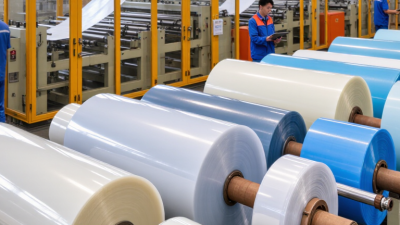
Choosing the best PVC film sheet supplier requires more than comparing prices. Material density is a practical quality checkpoint. PVC density typically ranges from 1.30–1.45 g/cm³, depending on formulation, plasticizer content, fillers, and processing. Technical data from the European Council of Vinyl Manufacturers places standard PVC near 1.4 g/cm³. A supplier quoting only “premium PVC” provides limited evidence. Ask for a batch-specific certificate of analysis, not a generic brochure. Confirm testing under ISO 1183-1 or ASTM D792. These methods help verify density through controlled measurement.
Tips: Request three recent test reports. Compare density, thickness, and batch numbers. Check whether the sample matches the delivered roll. A small mismatch matters. For example, excessive mineral filler may increase density while reducing flexibility or surface quality. Density alone cannot prove durability, clarity, or weldability.
During supplier audits, inspect the film edge and surface under strong side lighting. Look for pores, uneven gloss, streaks, and thickness variation. Measure several points across the roll, because one center reading can hide poor consistency. Industry quality guidance commonly treats thickness uniformity and documented traceability as essential control points. Still, published data can be imperfect. Different laboratories may produce slightly different results. Therefore, define an acceptable density tolerance before purchasing. A reliable supplier should explain deviations clearly and support independent retesting.
Verify material quality by checking PVC density. A typical PVC density reference range is 1.30–1.45 g/cm³.
The midpoint of the reference range is 1.375 g/cm³. Actual density may vary with plasticizers, fillers, pigments, and other formulation components, so request a current test report or certificate of analysis for each PVC film sheet grade.
A reliable PVC film supplier should provide tensile data under both ASTM D882 and ISO 527-3. These standards are not interchangeable. ASTM D882-18 is designed for thin plastic sheeting and measures tensile strength, elongation, and modulus. ISO 527-3 also covers films, but specimen shape, conditioning, gauge length, and test speed can differ. Small changes can alter the reported result.
Ask for the complete test report, not only a headline value. Check film thickness, specimen width, machine direction, cross direction, temperature, humidity, and the number of specimens. ASTM D882 commonly uses a 50 mm/min test speed for many film applications, while ISO 527-3 may use a speed selected according to material behavior. The report should identify whether results are mean values or individual readings. Variation matters.
Look for real production evidence. A 2024 plastics quality report from a European industry association noted that recycled and virgin polymer properties can vary between batches, especially when processing conditions change. For PVC film, compare at least three production lots. A supplier showing 22 MPa tensile strength is not automatically better than one showing 20 MPa. The testing conditions may differ.
I would also inspect the stress-strain curves. A smooth curve helps, but it is not proof of durability. Ask for retesting after heat aging and humidity exposure. One weakness remains: many reports omit clamping failures. That missing detail deserves attention. Reliability is built from comparable data, traceable samples, and honest disclosure of test limitations.
A reliable PVC film supplier should pass a document audit before offering a low price. Request current REACH declarations, RoHS test reports, ISO 9001 certificates, and application-specific approvals. REACH compliance should include substance screening and supply-chain traceability. The European Chemicals Agency’s REF-10 enforcement project inspected 2,407 products and found 18% non-compliant. That figure makes routine verification practical, not excessive.
RoHS applies mainly to electrical and electronic equipment, not every PVC film product. Ask whether the film contains lead, mercury, cadmium, restricted flame retardants, or phthalates. Independent laboratory reports should show test methods, sample identity, and dates. The ISO Survey 2022 recorded 1,265,216 ISO 9001 certificates worldwide. Yet a certificate does not guarantee every production batch. Paper is not proof. During supplier audits, inspect incoming-material records, extrusion controls, calibration logs, and retained samples. I would also compare the certificate scope with the actual factory address. This detail is easy to miss.
Tips: Ask for three recent batch records, not one. Check certificate validity through the issuing body. Require a change-notification process for additives, resin grades, and production sites. Request migration, flame, or weathering tests when the film enters medical, construction, packaging, or electrical applications. Traceability matters. A supplier may provide excellent documents but weak production discipline. That gap deserves direct questioning and, ideally, a witnessed sample inspection.
How to Choose the Best PVC Film Sheet Supplier?
A practical supplier audit starts with MOQ, not price. A low unit price may hide excess inventory, storage costs, and slow cash flow. Ask for MOQ by thickness, width, color, and finish. According to PlasticsEurope’s Plastics—The Fast Facts 2024, Europe produced about 54.6 million tonnes of plastics in 2023. Large output does not guarantee flexible ordering. A smaller trial batch can reveal surface defects, curling, and printing problems before full production.
Lead time should be measured from approved artwork or technical drawing, not from the first inquiry. Request separate figures for sampling, production, inspection, and dispatch. Record the supplier’s average and worst-case delivery times. A two-week promise means little without shipment evidence. I would also ask how resin shortages affect scheduling. Sometimes, the answer exposes weak planning.
Thickness tolerance needs written test conditions. Specify nominal thickness, measuring method, test locations, and acceptable deviation. ASTM D374 can support thickness measurement, but the purchase contract must define acceptance limits. For example, a 0.50 mm sheet with inconsistent edges may fail thermoforming, even when its average result looks acceptable. Warranty terms should state coverage, claim deadlines, replacement duties, and exclusions. Check whether defects found after slitting remain covered. Many warranties sound reassuring. They are not always practical. Request a sample warranty claim record, although suppliers may refuse to share confidential details.
| Anonymous Supplier Profile | Typical PVC Product Scope | MOQ | Standard Lead Time | Thickness Range | Declared Thickness Tolerance | Width Tolerance | Warranty Terms | Quality Documentation | Payment Flexibility | Overall Evaluation |
|---|---|---|---|---|---|---|---|---|---|---|
| Supplier Profile A | Flexible PVC film for packaging, lamination, and general industrial use | 500 kg | 15–20 working days | 0.08–1.00 mm | ±5% | ±1 mm | 12 months against manufacturing defects; claims require batch records and inspection evidence | Certificate of Analysis, thickness report, packing list, and basic safety data sheet | 30% deposit / 70% before shipment | ★★★★☆ |
| Supplier Profile B | Transparent and colored PVC sheets for printing, stationery, and protective applications | 300 kg | 20–25 working days | 0.10–2.00 mm | ±8% | ±2 mm | 6 months for confirmed production defects; storage and handling conditions apply | Batch inspection report available upon request; color and gloss data may be provided | 50% deposit / 50% before shipment | ★★★☆☆ |
| Supplier Profile C | Rigid PVC film and sheet for thermoforming, signage, and fabricated components | 1,000 kg | 25–35 working days | 0.20–3.00 mm | ±5% | ±1.5 mm | 12 months for material nonconformity; replacement or credit is subject to joint inspection | Certificate of Analysis, dimensional inspection report, RoHS declaration, and REACH statement | 30% deposit / 70% against shipping documents | ★★★★☆ |
| Supplier Profile D | Soft PVC film with customized embossing, surface finishes, and decorative patterns | 800 kg | 30–40 working days | 0.15–1.50 mm | ±10% | ±2 mm | 9 months for production-related defects; customized surfaces require approved samples | Pre-production sample, batch inspection data, and visual defect standard | 40% deposit / 60% before shipment | ★★★☆☆ |
| Supplier Profile E | High-clarity PVC film for packaging, medical-related outer packaging, and clean applications | 1,500 kg | 35–45 working days | 0.05–0.50 mm | ±5% | ±1 mm | 12 months for verified material defects; product must remain in original packaging and dry storage | Certificate of Analysis, lot traceability, migration test option, and technical data sheet | 30% deposit / 70% before shipment; letter of credit may be discussed | ★★★★★ |
| Supplier Profile F | Recycled-content PVC film for cost-sensitive industrial and promotional applications | 200 kg | 10–15 working days | 0.10–1.20 mm | ±10% | ±2 mm | 6 months for confirmed manufacturing defects; recycled-content variation is subject to specification | Basic batch report, recycled-content declaration, and visual inspection record | 50% deposit / 50% before shipment | ★★★☆☆ |